

Best Hand Wraps for Boxing: Our Top Picks for Protection, Fit and Value
Your hands are made of dozens of small bones, and every punch sends force straight through them. Good wraps are the cheapest insurance you will ever buy. Below, we compare ten popular options, explain how to choose, and help you match a wrap to your training style.

1. Why Hand Wraps Matter
A wrap does three jobs. It holds the small bones of the hand and the wrist in alignment, it cushions the knuckles, and it soaks up sweat so your gloves stay fresher. Without wraps, the metacarpals shift on impact, which is how boxer’s fractures and sprained thumbs happen.
Wraps are not a replacement for good gloves. If you are still shopping, start with our guide to the best boxing gloves for beginners, then come back here to pair them properly.
What is actually inside your hand
Each hand holds twenty-seven bones. Five long metacarpals run from the wrist to the knuckles, and they are the ones that take the beating when a punch lands. Those bones are held together by thin ligaments and small muscles that were designed for gripping and carrying, not for absorbing the shock of a fist meeting a heavy bag at speed. Even a perfectly thrown punch sends a sharp wave of force back up the hand and into the wrist. Wraps give that structure a second skeleton made of fabric.
The injuries wraps help you avoid
The most common problems for people who skip wraps are bruised knuckles, sprained thumbs, tender wrists and the dreaded boxer’s fracture, which is a break in the fifth metacarpal behind the pinky knuckle. None of these are guaranteed to happen, but they are common enough that nearly every coach will tell you to wrap without exception. A proper wrap does not make the hand invincible. It spreads pressure over a larger area, limits how far the wrist can bend backward, and keeps the knuckles from folding into each other.
They also protect your gloves and your gym mates
There is a hygiene reason too. Wraps absorb the sweat that would otherwise soak the glove lining. Dry gloves last longer, smell better and are far less likely to grow the bacteria that cause skin irritation. If you share a gym, nobody wants to pull on a pair of damp gloves after you, so wrapping is also simple courtesy.
Who needs them
The honest answer is everyone who hits something. A casual cardio-boxing class puts less force through your hands than a sparring session, but the repetition still adds up over weeks. Beginners are actually at higher risk, because their punching technique is not yet clean and they often land on the wrong part of the fist. If you plan to train more than once a week, treat wraps as a required piece of kit, right alongside your gloves and a mouthguard for contact work.
What a good wrap should do
A good wrap should feel snug across the knuckles, firm at the wrist and comfortable between the fingers. It should be long enough to wind around the hand several times without running out, and it should stay put for a full round of heavy bag work. If you find yourself re-wrapping halfway through a session, the wrap is either too short, too slick or too worn out. Keep these points in mind while reading the reviews below.
The wrist: the joint people forget
When most people picture a hand injury, they imagine the knuckles. In reality, the wrist is where a surprising number of problems start. The wrist is a cluster of eight small bones that glide against each other, and it relies on ligaments to stay stable. When a punch lands with the wrist slightly bent, the force goes straight into those ligaments. Over weeks, the repeated stress can produce soreness, swelling and a lingering ache that makes every punch feel worse than the last.
A wrap that includes several firm turns around the wrist acts like a brace. It will not stop you from ever bending the joint, and it should not. Instead, it limits how far the wrist can collapse under load, so your hand, wrist and forearm line up behind the punch. That alignment is also what lets you hit harder, because less energy is wasted in a wobbly joint. Coaches often say that a good wrap makes you a better puncher, not only a safer one, and that is largely why.
Do not skip the wrist wrapping even when you are in a hurry. Five seconds spent on a few extra turns can save weeks of nagging pain. If you struggle to keep the wrist firm, choose a wrap with a wide, strong closure, because the closure is what holds everything in place once the fabric is wound. Think of the wrist portion as the foundation. If it is weak, everything built on top of it will shift.
Finally, remember that wraps support but do not cure. If you feel sharp pain in the wrist, swelling that does not settle or numbness that lingers after training, rest and speak to a qualified health professional. Wraps are a protective tool for healthy hands, not a substitute for proper care when something is wrong.
Building good habits early
The boxers who stay healthy longest are rarely the ones with the most talent. They are the ones who treat small details seriously, and wrapping is the most basic of those details. Make it a ritual: wrap before you warm up, check the fit as you shadowbox, and adjust before you touch a bag. That sequence takes a couple of minutes and turns protection into habit instead of an afterthought. Over months, those minutes add up to healthier knuckles, steadier wrists and fewer missed sessions.
Browse the most popular boxing hand wraps on Amazon.
Shop Hand Wraps2. Quick Picks
- Best overall: Venum Kontact (180″) — soft, secure and easy to wrap.
- Best Mexican style: RDX Mexican Style (180″) — stretch that locks in place.
- Best premium: Hayabusa Perfect Stretch 4.0 (180″) — thumb loop and strong closure.
- Best budget: Everlast Core (120″) — fine for light bag work.
- Best for sparring: Everlast Elite (180″) — thicker coverage over the knuckles.
- Best value multipack: Meister 3-Pair Pack — plenty of spares.
- Best quick option: RDX Gel Inner Gloves — slip on and go.
How we ranked these wraps
We looked at the factors that matter to people who actually train. First, how the wrap holds tension from the first round to the last. Second, how comfortable it feels between the fingers and across the back of the hand. Third, how long it lasts through repeated washing. Fourth, how easy it is for a beginner to put on without help. Finally, we weighed price against what you get for it. A premium wrap that lasts a year can be cheaper over time than a basic wrap you replace every few weeks.
Matching a wrap to the way you train
If you mostly hit the heavy bag and mitts, a stretchy 180-inch wrap gives you the best balance of coverage and comfort. If you spar regularly, you want more material over the knuckles and a closure you can trust, so the Everlast Elite and Hayabusa are natural fits. If you do fitness boxing or cardio classes, a shorter 120-inch wrap or a slip-on inner glove is often enough. And if you are buying for a household of several people, a multipack saves arguments about whose turn it is to use the clean pair.
A word on price
Hand wraps are among the least expensive pieces of boxing equipment, so it rarely makes sense to buy the very cheapest pair you can find. The difference between an average wrap and a great one is often only a few dollars, and the improvement in fit and durability is immediate. Spend a little more on your first pair, and you will know exactly what you like when it is time to try something different.
Building a small kit that covers everything
You do not need ten pairs of wraps, but a small, sensible kit pays for itself. A sensible starting point is two matching pairs of 180-inch wraps, so one can dry while the other is in use. Add a lightweight pair for warm-ups or cardio days, and perhaps a slip-on inner glove as an emergency backup. This setup costs very little, and it means you are never stuck training with damp, smelly fabric.
Keep your wraps in a separate mesh pouch or a ventilated section of your bag. Rolling them after use, with the thumb loop outward, makes them quick to unroll next time and keeps the hook-and-loop strap from snagging on other gear. Some boxers label each pair with a marker on the tag so they can track which has been washed and which is next in rotation.
If you train at several gyms or share equipment with family, it also helps to choose different colors. It sounds trivial, but it prevents swaps, and it is much more hygienic when each person has their own pair. Many of the options here come in a range of colors, so it is easy to give everyone a distinct set.
Finally, set a reminder to check your wraps every month or so. Stretch them gently and look at the closure and the stitching. A quick inspection takes seconds, and catching early wear means you replace them before they let you down mid-session.
See current prices and sizes for the top-rated wraps.
Check Top Rated Wraps3. Mexican vs. Traditional Wraps
Traditional wraps are cotton or cotton-blend with little give. They are sturdy and cheap, but they loosen mid-session and can leave pressure points if wrapped tightly. Mexican-style wraps use a stretchy, semi-elastic weave that hugs the hand, stays tighter for longer and is more forgiving when you wrap quickly.
Which should you pick?
Most beginners find Mexican-style wraps easier. Purists who like a rigid feel may stay with traditional cotton. If technique is your sticking point, read how to wrap hands for boxing in our step-by-step wrapping guide.
How traditional wraps feel
Traditional wraps are woven cotton, usually with little or no elasticity. They are the old-school choice, and many trainers still teach on them. Their advantage is rigidity. Once you have wound them properly, they lock the hand and wrist into a firm unit that does not give. The downside is that they loosen gradually as you sweat and move, and they take practice to wind without wrinkles or hard ridges that dig into the skin.
How Mexican-style wraps feel
Mexican-style wraps are stretchy and slightly textured, so the layers cling to each other. You pull the fabric a little as you wind it, and it hugs the hand like a second skin. Because the material has some give, it forgives small mistakes in technique. It also tends to stay in place for longer, which is why so many boxers and mixed martial artists swear by it. The trade-off is that the stretch can wear out over time, and over-tightening is easier to do without noticing.
Which one suits you
If you are brand new, start with a Mexican-style wrap, which makes the learning curve gentler. If you have been training for years and like a stiff, supportive wrap, a traditional cotton option may feel more familiar. Many experienced boxers own both and switch depending on whether they are sparring or hitting pads. Neither style is universally better. What matters is that the wrap suits your hand size and that you wind it the same way every time.
Where inner gloves fit in
Gel inner gloves sit between the two. They give less customizable support than a full wrap but are far faster to put on. They are a good option for kids, for classes where time is tight, and for anyone who simply hates winding. We cover them in more detail later in the article.
A short history of the two styles
Traditional hand wraps come from the early days of professional boxing, when fighters bound their hands with strips of cloth and gauze. Cotton was cheap, readily available and absorbent, and trainers developed intricate wrapping patterns that were passed from coach to student. Those patterns remain the foundation of modern technique, and you can still see traces of them in the way boxers wind around the thumb and knuckles today.
The Mexican-style wrap rose to popularity as boxers and mixed martial artists looked for something that stayed tighter, longer. By adding elastic fibers to the weave, makers created a fabric that clings to itself and keeps its shape. The result is a wrap that feels almost like a second skin and that many fighters now treat as the default choice. Its popularity spread through gyms in the United States and Europe, and now nearly every major brand offers a version.
Neither style replaced the other. Instead, they settled into different roles. Traditional wraps remain common in old-school gyms and among trainers who prefer a stiff, supportive feel. Mexican-style wraps dominate in gyms where speed, comfort and consistency matter. If you are curious, try both on different days and notice how your hands feel after an hour of work. Your own experience is a better guide than any rule.
Whichever you pick, learn the basic winding method and repeat it every time. Consistency matters more than style. A well-wound cotton wrap will protect you better than a sloppy elastic one.
Switching styles without frustration
If you move from one style to the other, expect a short adjustment period. Elastic wraps need less pulling, while cotton needs firmer tension and more care to avoid loose spots. Give yourself a few sessions before deciding which you prefer, and ask a coach to check your first attempts. Small changes in how you wind can make a big difference in comfort.
Compare stretchy Mexican-style wraps.
Shop Mexican Style Wraps4. Choosing the Right Length
Length decides how much protection you get. A 120″ wrap covers the basics for small hands and light bag work. A 180″ wrap lets you build knuckle padding and anchor the wrist properly, which is what most adults want. A 200″ wrap suits large hands or heavy sparring.
- 120″: small hands, teens, light fitness boxing.
- 180″: the standard for most adults.
- 200″: big hands, extra wrist support, or those who like thick padding.
Why length matters more than most people think
A wrap has several jobs, and each one uses up a different part of the fabric. You need a portion to anchor around the wrist, a portion to pass around the thumb, a portion to weave between the fingers, and a portion to build up padding over the knuckles. If the wrap is too short, you will run out before the knuckle layers are thick enough, and the part of the hand that takes the most force ends up the least protected.
How to choose by hand size
Measure around your knuckles with a soft tape. Under about seven inches usually points to the shorter 120-inch wraps, especially for teens and smaller adults. Between roughly seven and nine inches, a 180-inch wrap is the safe default. Above that, or if you simply like a thick, cushioned feel, look at the 200-inch options. If you are between sizes, choose the longer one. You can always finish with a little extra fabric around the wrist, but you cannot add length that is not there.
Does gloves size change the answer?
It can. A very thick wrap in a tight glove will feel cramped, and a thin wrap in a roomy glove will let the hand slide around. If you are unsure about your glove fit, it is worth checking sizing before you commit to a long wrap. Remember that wrapping is a layer of your equipment, not an afterthought, and the two pieces should work together.
Quick reference
For light bag work or fitness classes, 120 inches is fine. For most training, 180 inches is ideal. For large hands or heavy sparring, 200 inches is worth the extra time. Keep a spare pair if you train often, because even the best wrap needs a day to dry.
Testing your length at home
You can check whether a wrap length suits you before you even train. Begin by anchoring the wrap at the thumb loop and making three turns around the wrist. Next, wind around the palm and over the back of the hand a couple of times. Then pass through the thumb. After that, weave between the fingers and finish with a few layers across the knuckles. If you reach the end of the fabric before you finish these stages, the wrap is too short for your hand.
It is also worth paying attention to what remains at the end. A little extra wrapped around the wrist is ideal, because it locks the closure in place. If you have a lot of leftover fabric, you might be able to use a shorter wrap and save time. But if you have none, you will probably find the wrap loosens during the session, since the final turns are what hold everything together.
Hand shape matters as much as size. Wide, flat hands often need more length to build up the same padding. Narrow, long hands may need less. Hands that are naturally bony across the knuckles also tend to benefit from a thicker layer. Trial and error is part of the process, and a spare pair in a different length is a small expense.
Finally, remember that your needs can change. If you move from light fitness work to sparring, you may find that the length that suited you before no longer feels like enough. Do not hesitate to move up.
Find the length that fits your hands.
Shop 180″ Wraps5. Material and Stretch
Cotton absorbs sweat well and feels natural. A cotton-elastic blend gives structure and a secure grip on the wrist. Too much stretch can cut circulation if you pull it tight, while too little makes the wrap bunch. Look for a blend that holds tension without feeling like a tourniquet.
Closures matter too. A wide, sturdy hook-and-loop strap keeps the wrist locked in. Flimsy closures peel mid-round, and that is how wraps slip.
Cotton, blends and what they mean for you
Pure cotton is soft and absorbent, but it has almost no elasticity, so it relies entirely on your winding technique to stay tight. A cotton blend with polyester or elastic fibers adds stretch and recovery, which means the wrap can be pulled snugly and will spring back instead of stretching out permanently. Most of the wraps in this guide use a blend, and that blend is a big part of why they feel so different from one another.
How much stretch is right
A wrap with too little stretch will not conform to the curve of the knuckles, and gaps appear that let the bones move. A wrap with too much stretch tempts you to pull hard, which can cut off circulation or leave deep grooves in the skin. The sweet spot is a wrap that stretches easily when you tug it, then holds the tension without continuing to creep. You should be able to flex your fingers freely once it is on.
Thumb loops and closures
The thumb loop is the small sewn loop at the start of the wrap that you slip over your thumb. It keeps the wrap from drifting while you wind, and it makes the first few turns much easier for beginners. The closure at the other end is just as important. A wide strip of hook-and-loop fabric holds far better than a narrow one, and a sturdy stitched seam at the end prevents fraying after repeated washing. Cheap closures are the first thing to fail.
Breathability and comfort
Wraps trap heat, so lightweight, breathable material makes a real difference in a long session. Look for a fabric that feels smooth against the skin, with no scratchy edges and no rough seams between the fingers. If you have sensitive skin, a softer cotton blend is usually kinder than a stiff synthetic.
Durability signs to watch for
A wrap that has seen better days will slide, bunch or lose its stretch. Fraying edges, loose stitching around the closure and sections that no longer snap back are all signs it is time to replace it. Wraps are inexpensive, so there is no reason to train with a worn pair.
How different weaves behave in practice
The weave of a wrap shapes how it behaves more than the label suggests. A tight, flat weave feels smooth and slides easily against skin, which many people like for comfort but which can be slippery during winding. A looser, more textured weave grips itself better, so the layers stay put, but it can feel slightly rougher on sensitive skin. When you compare wraps, pay attention to this texture as much as the stretch.
Fabric thickness also changes padding. A thicker wrap builds cushion faster, which is helpful if you have sensitive knuckles. A thinner wrap lets you build a lower-profile layer, which can be more comfortable in tight gloves. There is no ideal thickness, only the one that suits your hand and your gloves.
Washing affects the fabric over time. Almost every wrap loses a little stretch after the first few washes, then settles. That is normal. What you want to avoid is fabric that goes limp, pills or loses its grip. Quality wraps keep their behavior through dozens of washes, while cheaper ones deteriorate quickly. This is the main reason why paying a little more often saves money in the long run.
Finally, consider climate. In hot gyms, lighter, breathable fabrics help keep hands comfortable. In cold conditions, a thicker wrap adds warmth. If you train in a wide range of settings, having two weights of wrap makes sense.
Matching material to sensitive skin
If your skin is easily irritated, look for softer cotton-rich blends and avoid anything that feels coarse on the inner wrist. Wash new wraps once before the first session to remove residue from manufacturing, and always make sure they are fully dry before wrapping. If redness or itching appears, stop using that pair and try a different fabric, because irritation often gets worse with sweat and friction.
Compare breathable, stretch-blend options.
View Elastic Wraps6. Detailed Reviews
The ten options below cover the full range, from budget classics to premium wraps and slip-on alternatives. We have listed each with a short summary, the main strengths and the trade-offs, so you can see quickly which suits your own training style. Prices vary, so the links take you straight to the current listings.
When comparing, think about three things first: the length you need, whether you prefer a stretchy or stiff feel, and how often you will be washing them. Everything else is a refinement on those three. If you are still working out the basics of the sport, our guide on how to start boxing will help you decide what to buy first.

Venum Kontact Boxing Hand Wraps (180″)
A soft, semi-elastic wrap that molds around the hand and stays put through a long bag session. The thumb loop and wide closure make setup quick.
What stands out is the balance. The fabric has enough stretch to follow the shape of the knuckles, yet it does not creep or loosen after twenty minutes on the bag. The thumb loop sits where it should, so beginners can get a clean first pass without fumbling. After repeated washes the closure kept its grip, which is the point where many cheaper wraps start to fail. It is a little warm in summer gyms, but that is the price of a snug, cushioned wrap. If you want one pair that works for pads, bag work and light sparring, this is the safest buy in the list.
- Comfortable fit
- Stays tight
- Can feel warm
- Needs washing often

RDX Mexican Style Hand Wraps (180″)
A stretchy, grippy wrap that hugs the knuckles and wrist. It is a dependable choice when you want a snug feel without fuss.
The weave has real grip, so each layer clings to the one beneath it and the wrap behaves like a single piece instead of sliding strands. That makes it forgiving for newer boxers who are still learning how much tension to use. It sits comfortably between the fingers and does not bunch at the thumb. Expect the stretch to soften after months of heavy use, which is normal for any elastic wrap. Considering the price, it delivers more support than you would expect and makes an excellent second pair to keep in your gym bag.
- Good elasticity
- Fair price
- Stretches over time

Hayabusa Perfect Stretch 4.0 (180″)
A premium wrap with a refined stretch pattern and a strong wrist closure. It suits serious training, though you pay for the build.
Hayabusa builds this wrap for people who train hard and wash often. The stretch is firm and consistent, which means it holds tension from start to finish and recovers well after laundering. The wrist closure is wide and locks the joint in place, a real advantage during sparring or long pad sessions. You will feel the quality in the stitching and the soft finish of the fabric. It costs more than most, so beginners may not need it yet, but anyone who punches several times a week will appreciate how long it lasts.
- Excellent durability
- Secure wrist lock
- Higher price
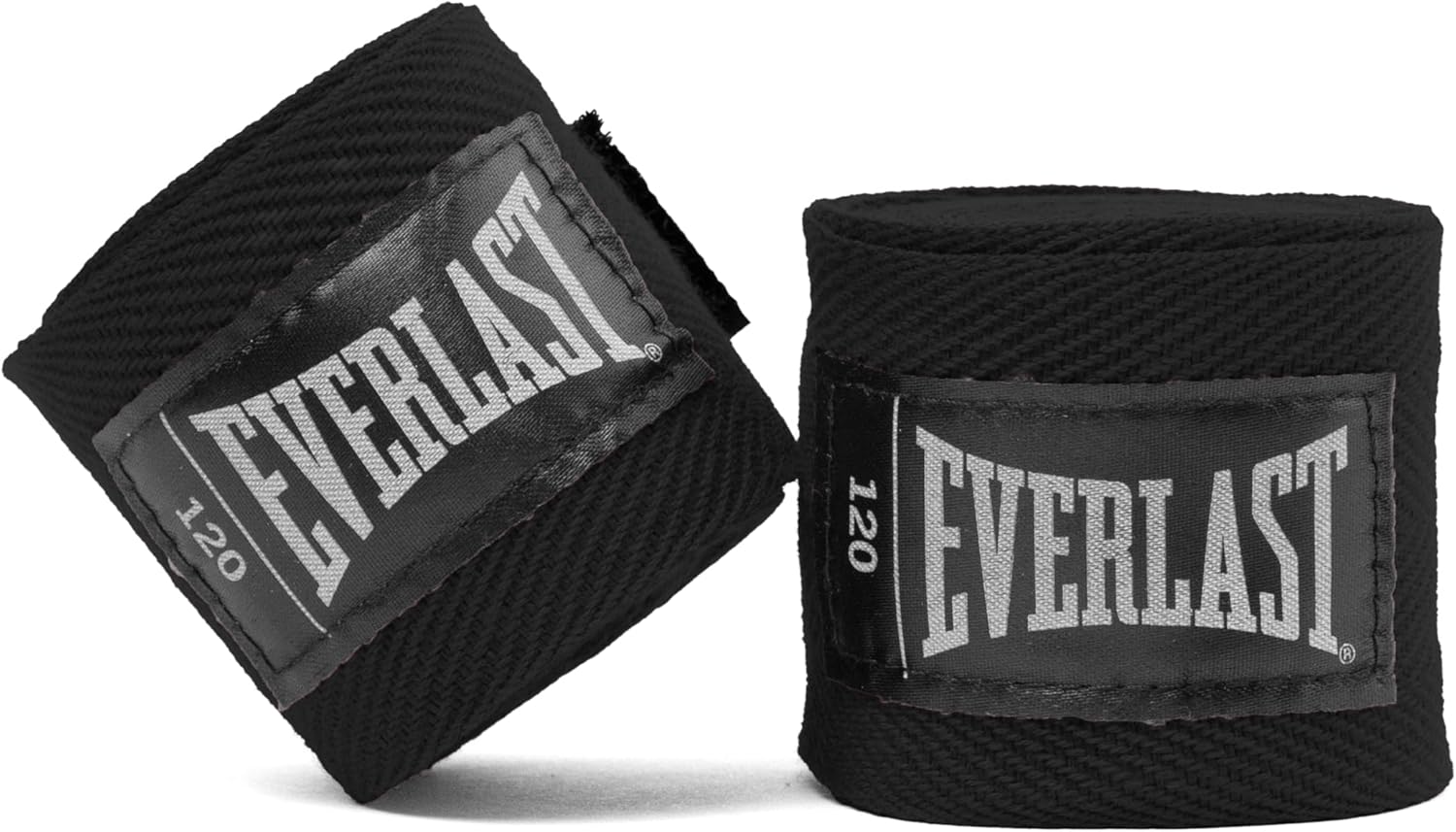
Everlast Core Handwraps (120″)
A simple, no-frills wrap for fitness boxing or smaller hands. It is short, so heavy hitters may want more length.
This is the wrap many gyms hand out, and for good reason. It is light, simple and inexpensive, and it works well for fitness boxing, cardio classes and younger athletes. At 120 inches it is short, so people with larger hands will find they run out of fabric before building much knuckle padding. If that describes you, step up to the longer Everlast Elite instead. For a first pair or a backup, though, the Core is a sensible, low-risk purchase.
- Affordable
- Easy to wrap
- Limited coverage

Ringside Mexican Style Hand Wraps (180″)
A trusted gym staple with a reliable stretch and a clean fit. Great for daily training.
Ringside has equipped boxers for decades, and this wrap shows it. The stretch is reliable, the length is generous and the feel is plain and practical. Nothing about it is flashy, but it does the job day after day. The closure is basic compared with premium options, so you will want to press it firmly each time. If you want a trustworthy workhorse that will handle weekly training without fuss, this is a safe pick that rarely disappoints.
- Dependable
- Good length
- Basic closure

Meister Adult 180″ Hand Wraps (3-Pair Pack)
Three pairs means you can rotate while others dry. Ideal for people training several days a week.
The real benefit here is rotation. Because wraps need time to dry, owning three pairs means you always have a clean one ready, and you can wash them in a single load. The material is simple and the closures are standard, so it lacks the polish of premium brands. But for people training four or five days a week, or for families sharing gear, the convenience and price are hard to beat. Label each pair so you know which one is next in line.
- Great value
- Always a clean pair
- Less premium feel

Everlast Elite Hand Wraps (180″)
A step up from the Core, with more length for knuckle padding and better wrist support during sparring.
The Elite gives you more fabric and a thicker feel than the Core, which is what you want when sparring. The extra length lets you build solid padding across the knuckles and still finish with several turns around the wrist. It is a touch bulkier, so check that your gloves have enough room. For anyone moving from basic bag work to partner drills, this is a smart upgrade and a pair you can rely on.
- Good coverage
- Solid for sparring
- Slightly bulky

Sanabul Elastic Hand Wraps (120″)
A light, stretchy wrap suited to cardio-boxing and bag work with moderate power.
Light and breathable, the Sanabul wrap suits cardio-heavy sessions where comfort matters more than maximum support. It is quick to wrap and dries fast. Because it is only 120 inches, larger hands and hard hitters will find the coverage thin. For fitness boxing, shadowboxing and moderate bag work, though, it is a pleasant, affordable choice.
- Light and breathable
- Short for big hands

Gold BJJ Mexican Style Hand Wraps (200″)
The longest option here. Perfect for large hands or anyone who wants thick padding and extra wrist support.
At 200 inches, this wrap gives you room to do everything: anchor the wrist firmly, work the thumb, weave through the fingers and still stack padding over the knuckles. People with big hands often struggle with shorter wraps, and this solves that. The longer length takes a bit more time to put on and can run warm, but the protection is excellent. If other wraps never seem quite long enough, start here.
- Extra length
- Great for big hands
- Takes longer to wrap
How to get the best from any of these wraps
No matter which pair you choose, a few habits will improve how it performs. Start with clean, dry hands, and trim your nails so the fabric does not snag. Anchor the wrap properly at the thumb loop, then make steady, even turns without twisting the fabric. Keep a light, consistent tension and smooth out wrinkles as you go, because creases create pressure points under the glove.
Wrap with your fingers spread slightly, then relax into a loose fist to check the fit before finishing. Wrapping with the hand fully clenched leads to wraps that are too tight when you open the hand, while wrapping with the hand fully flat can leave them too loose when you close it. A loose fist is the happy medium. Finish by pressing the closure firmly so it grips and stays there.
Adjust how much padding you build over the knuckles based on the type of training. Heavy bag and sparring sessions call for a thicker layer, while pad work and shadowboxing need less. Keep a mental note of how many turns suit each type of session and repeat them consistently. Over time, the process becomes almost automatic.
If you are brand new to wrapping, practice at home with no pressure. A few attempts in front of a mirror will teach you more than a rushed attempt before class. Once you have found a method you trust, stick with it.
How we would choose if we had to buy only one
If forced to pick a single pair for almost any boxer, we would go with the Venum Kontact because it blends comfort, grip and durability in one package. For tighter budgets, the RDX Mexican style gives most of that experience for less. And if you already know you will spar often, spend a little more on the Hayabusa. Any of the three will serve you well for a long time.
Ready to pick a pair? Compare all of them in one place.
Compare on Amazon7. Gel Wraps and Inner Gloves
Gel inner gloves are the fastest option. They slip on like a glove, with built-in knuckle padding and a wrist strap. The RDX Gel Boxing Hand Wraps / Inner Gloves are a popular example.

RDX Gel Boxing Hand Wraps / Inner Gloves
Excellent for beginners, kids’ classes and busy gym sessions. They give less custom support than a full wrap, so serious sparring partners often prefer traditional wrapping.
These work best when speed matters most, such as classes with short breaks, children learning the basics or anyone who dislikes winding. The padding is built in, so you get cushioned knuckles right away. They cannot be tuned to your hand the way a long wrap can, and the wrist support is lighter. Think of them as a convenient everyday option, not a replacement for a properly wrapped hand when sparring.
- Quick to put on
- Padded knuckles
- Less wrist customization
How inner gloves differ from a standard wrap
A standard wrap is a long strip of fabric that you wind around the hand, so you decide exactly where the padding goes. An inner glove is a sewn glove with padding already placed over the knuckles and a short strap around the wrist. You trade customization for speed. For many everyday training sessions, that trade is a good one, because the biggest reason people skip wrapping is the time it takes.
Who benefits most
Beginners benefit because the fixed padding protects the knuckles before technique is consistent. Children and teens benefit because they can put them on without help. Busy people in class-based gyms benefit because they save minutes before every session. Experienced boxers often keep a pair in the bag as a backup for days when they are running late.
Where inner gloves fall short
The wrist is the main weakness. A short strap cannot lock the joint the way several turns of wrap can, and the padding cannot be shifted if you need more cushion on one side. If you spar hard or have wrist issues, a proper long wrap is the better tool. Also remember that inner gloves still need washing, so a spare pair is useful.
Can you wear both?
Some people wear a short wrap under an inner glove for extra wrist stability. It works, but it adds bulk and heat, and your gloves must have room to accommodate it. Test it in a light session first.
Choosing between wraps and gel gloves for kids
Parents often ask whether children should use traditional wraps or gel inner gloves. For young beginners, inner gloves have real advantages. Kids often get frustrated with winding, and a poorly wrapped hand is arguably worse than none. Slip-on gloves are quick, give consistent padding and keep children focused on learning to punch properly instead of wrestling with fabric.
That said, older teens who train regularly should learn proper wrapping. It teaches discipline, helps them understand hand structure and prepares them for the equipment they will use later. A shorter 120-inch wrap is usually a good size for smaller hands, and a coach can show them the basic pattern in a few minutes.
Make sure whatever you buy fits properly. Gloves that are too big slide around, while ones that are too small pinch. Check the sizing chart and, if the hands are still growing, consider that you may need to replace them more often than adults do.
Finally, keep hygiene in mind. Children’s hands sweat as much as anyone’s, and gel gloves can trap moisture. Wash them regularly, air dry them fully and avoid sharing between children.
Prefer a slip-on option? Browse gel inner gloves.
Shop Inner Gloves8. Comparison Table
| Wrap | Length | Style | Best For |
|---|---|---|---|
| Venum Kontact | 180″ | Semi-elastic | All-round |
| RDX Mexican | 180″ | Mexican | Snug fit |
| Hayabusa 4.0 | 180″ | Premium stretch | Serious training |
| Everlast Core | 120″ | Basic | Light bag work |
| Ringside Mexican | 180″ | Mexican | Daily gym use |
| Meister 3-Pack | 180″ | Standard | Value |
| RDX Gel | Slip-on | Inner glove | Convenience |
| Everlast Elite | 180″ | Stretch blend | Sparring |
| Sanabul | 120″ | Elastic | Cardio boxing |
| Gold BJJ | 200″ | Mexican | Large hands |
How to read the table
The table sorts each wrap by length, style and its best use, so you can narrow the field in seconds. Start with length, because it is the least flexible factor. Then choose between stretchy and standard styles. Finally, think about price and how often you will need to replace the pair. A multipack, a premium wrap and a budget wrap can all be the right answer depending on how you train.
Best by situation
For beginners, the Venum Kontact and RDX Mexican are the easiest to learn on. For sparring, the Everlast Elite and Hayabusa add support. For large hands, Gold BJJ at 200 inches stands alone. For value and rotation, Meister gives you three pairs. For kids and fast setups, RDX Gel is the quickest.
What the table cannot tell you
No chart can capture feel. Two wraps with identical length can feel very different on the hand, because the weave, stretch and closure all affect comfort. If you can, try a teammate’s pair before you commit. Otherwise, remember that wraps are inexpensive enough that buying a second style to compare costs little.
Value over time
Price comparisons can mislead if you only look at the sticker. A very cheap wrap that loses its stretch in a month costs more than a mid-priced one that lasts half a year. To compare fairly, divide the price by how long you expect it to last. Premium wraps usually win this calculation for people who train often, while cheaper options win for occasional users.
Multipacks complicate this further. Because you are splitting the wear across three pairs, each lasts longer, and you always have a clean one available. For people training four or five times a week, that convenience is worth more than a small difference in per-pair quality.
Also consider how you will use the wraps. A competitive boxer who spars twice a week and replaces wraps frequently might choose an affordable multipack. A hobbyist who trains once or twice a week might choose a single premium pair and enjoy it for much longer. Your own pattern should guide the decision.
When in doubt, buy one reliable pair, use it for a few weeks and note what you like or dislike. Then you can make a better second purchase with real information instead of guesses.
Found your match? Check availability now.
See Latest Prices9. Wraps and Glove Fit
Wraps add bulk, so glove size matters. If your gloves feel tight with 180″ wraps, you may be in the wrong size. Check what size boxing gloves you need before buying. New gloves also feel stiff at first, so see how to break in boxing gloves for a smoother start.
Wrap thickness and glove volume
Gloves are built with a certain internal volume. A long, thick wrap takes up a lot of that space, so a pair that felt roomy over bare hands may feel tight once you add 180 inches of fabric. A good test is to wrap fully, slide into the glove and make a fist. If you feel squeezing across the knuckles or struggle to close your fingers, the fit is too snug.
Fixing a tight glove
Before blaming the wrap, check whether the gloves are simply new. Leather and synthetic padding soften with use, and the first weeks are always the stiffest. Our guide on how to break in boxing gloves shows how to speed that up. If the gloves are still too tight after breaking in, consider a shorter wrap or the next glove size.
Fixing a loose glove
If your hand slides around, the wrap may be too thin or too short, or the gloves may be too large. Adding a little more fabric across the knuckles often solves it. If you are in between sizes, the choice usually comes down to which style of training you do most.
Matching wraps to purpose
Heavy bag work and sparring each call for slightly different setups. Sparring often needs a thicker wrap and a bigger glove, which puts more volume in the hand. Shadowboxing and light pad work need very little. Keep two wrap styles in your bag if you do both.
Choosing gloves with wraps in mind
Many people buy gloves first and wraps later, which is sensible, but it helps to think about both together. Gloves with a roomier fit and good hand compartments handle thick wraps comfortably. Gloves with a tight, contoured fit suit thin wraps or inner gloves. If you spar, you will probably want extra room for a thicker wrap and for the swelling that sometimes follows a hard session.
Try gloves on while wearing the wraps you plan to use. In a store, ask to try them with your own pair. If you are buying online, check how other buyers describe the fit and whether the brand runs small. Return policies are worth reading too, in case the combination does not work.
Weight matters as well. Heavier gloves protect more but can tire your arms, so make sure your wraps and gloves match the type of training you do. For heavy bag work, many people prefer a mid-weight glove and a snug wrap. For sparring, safety rules at the gym usually decide the glove weight.
Finally, keep your gloves fresh. Wraps help a great deal, but gloves still need airing out. Open them fully after each session and let them dry away from direct heat.
A simple fit check before every session
Before you tie your gloves, wiggle your fingers and make a loose fist inside them. Your thumb should sit naturally, the wrap should not bunch, and your knuckles should feel supported without being squeezed. If something feels off, take thirty seconds to re-wrap. It is far easier to fix a problem at the start than to discover it halfway through a round.
Pair your wraps with the right gloves.
Shop Boxing Gloves10. Care and Washing
Sweaty wraps breed bacteria and odor. Wash them after each hard session in a mesh bag, on a gentle cycle, with the hook-and-loop closed. Air dry; high heat damages elastic. Our guide on how to wash boxing hand wraps covers the details. A multipack makes rotation painless.
Why washing matters
Wraps live right against your skin and soak up sweat for the whole session. If you leave them balled up in a bag, bacteria and mold thrive. That causes odor, skin irritation and even infections in small cuts or scrapes on the knuckles. Regular washing keeps the elastic fibers in better condition too, since dried sweat salts break them down.
A simple routine
Close the hook-and-loop strap, put the wraps in a mesh laundry bag, and run a gentle cycle with cold or warm water and mild detergent. Skip fabric softener, which coats the fibers and reduces grip. Hang them to air dry, spread out so air reaches every layer. Avoid hot dryers, which shrink and weaken the elastic.
Between washes
After each session, unwind them fully and hang them somewhere airy. Never zip them into a closed bag while damp. If you cannot wash them straight away, at least let them dry flat. If your hands tend to sweat a lot, rotate pairs.
When to replace
Replace wraps when the stretch fades, the closure peels or the fabric thins. Many boxers swap pairs every few months, sooner with heavy use. Odor that never leaves, even after washing, is another clear sign. For detailed steps and troubleshooting, see our full guide on washing hand wraps.
Dealing with stubborn odor
Even with regular washing, some wraps hold a stubborn smell. This usually comes from bacteria that settle deep in the fibers. A pre-soak helps. Fill a basin with cool water and a splash of white vinegar, soak the wraps for about thirty minutes, then wash as normal. The vinegar helps break down odor without harming the fabric when used in small amounts.
Avoid bleach, which weakens elastic fibers and can discolor the fabric. Likewise, skip hot water if the label advises against it, since heat shortens the life of the stretch. If you are unsure, follow the washing instructions on the packaging, because each brand blends its materials slightly differently.
Prevention beats cure. Hang your wraps up after every session, avoid leaving them in a closed gym bag, and rotate pairs. If your gym bag itself smells, wash or air it too, because bacteria spread between items. A small packet of moisture-absorbing material in the bag can also help.
If odor returns quickly after washing, it may be time for a new pair. At that point, the fibers are holding too much bacteria to be worth saving, and a fresh set is a small price for healthier hands.
Travel and gym-bag tips
If you travel for training, pack a spare pair in a breathable bag and wash the used ones at the first chance. A small mesh pouch lets air circulate and keeps them from touching damp clothes. At competitions or camps, rinse them in the sink at night and hang them near an open window so they are ready by morning.
Stock up so you always have a clean pair.
Shop Multipacks11. Mistakes to Avoid
- Wrapping too tight: numb fingers mean the wrap is cutting circulation.
- Skipping the wrist: an unsupported wrist is the usual injury point.
- Using damp wraps: they lose grip and smell fast.
- Choosing too short: not enough padding over the knuckles.
New to the sport? Here is how to start boxing with sensible gear.
Wrapping too tight
Beginners often pull as hard as they can, thinking tighter means safer. In fact, over-tight wraps cut circulation, cause tingling and numbness, and can make your hand tire sooner. The wrap should feel firm and supportive, never painful. If your fingers change color or feel cold, unwind and start again.
Ignoring the thumb
The thumb is a frequent injury spot, but many people skip wrapping it. A simple loop around the thumb base keeps the joint steady and prevents it from bending backward on impact.
Leaving gaps between the knuckles
Padding that is uneven across the four knuckles leaves one of them exposed. Build the layers evenly, and check that the fabric lies flat without creases that can press into the skin.
Skipping wrap practice
Wrapping is a skill. The first few attempts will take a long time and feel clumsy. Repeating the same pattern every time makes it faster and more consistent. Many gyms will happily show you if you ask.
Wearing damaged wraps
Stretched-out, frayed or smelly wraps are not worth training in. They support less, irritate skin and can fail mid-session. Replace them promptly.
Choosing gear only on looks
Color and branding are fun, but fit and function matter more. If you are also building the rest of your kit, our guide to the best boxing gloves for beginners is a good next step.
Habits that make wrapping easier
Wrapping becomes much easier when you build a small routine. Always start from the same side of the hand, always count your turns, and always finish with the same sequence. That routine helps you notice if something feels off. It also makes it easier for a coach to correct your technique, because they can see exactly where you are going wrong.
Pay attention to how your hand feels in the first few minutes of training. If you notice pinching, tingling or hot spots, stop and re-wrap. Ignoring a small problem often leads to blisters or sore patches that last far longer than the few seconds it takes to fix them.
It is also smart to wrap at the gym, not in the car or on the way. Wrapping in a calm environment, with room to spread the fabric, gives you better results. If you train with a partner, help each other check for twists, folds and loose ends. A second pair of eyes catches mistakes you might miss.
Finally, be patient. Every boxer you admire once struggled with their first wrap. With a few weeks of practice, you will do it quickly and well.
Get the right length the first time.
Shop Beginner Wraps12. Our Final Verdict
For most people, Venum Kontact is the easiest recommendation. Choose RDX or Ringside for a good Mexican-style stretch, Hayabusa for premium durability, the Meister pack for value, Gold BJJ for large hands, and RDX Gel when speed beats customization. Whatever you pick, wrap every time you train.
Our recommendations by type of boxer
The beginner: choose the Venum Kontact or RDX Mexican. Both are easy to wrap and comfortable from day one. The regular trainer: pick the Meister multipack or Ringside so you always have a clean pair. The sparring partner: go for Everlast Elite or Hayabusa for firmer coverage. The big-handed boxer: Gold BJJ is the clear winner. The fitness boxer: Everlast Core or Sanabul are light and affordable. The person in a hurry: RDX Gel inner gloves get you moving in seconds.
Final thoughts
Wraps are inexpensive and easy to overlook, but they sit between your bones and everything you hit. Buy a pair that fits your hands, learn to wrap evenly and wash them often. Do that, and you will train longer with fewer niggling injuries. Whichever wrap you choose from this list, you are making a smart investment in your hands.
What to do next
Now that you know what to look for, the next step is simple: choose the wrap that fits your hands and your training, and start using it consistently. Wear it every session, wash it regularly and replace it when it gets tired. That small routine is one of the easiest ways to protect your hands and stay in the gym for the long run.
If you are early in your boxing journey, spend a little time learning the basics of wrapping and take the time to check your fit before each session. Ask your coach for feedback, and do not be afraid to experiment with different styles until you find what feels best. Boxing is a sport of details, and hands are one of the most important ones.
It is also worth thinking about the bigger picture of your kit. Good wraps, properly fitting gloves, quality footwear and a clean bag all work together. Upgrade them step by step as your training grows more serious. There is no need to buy everything at once, but each piece you add will make your sessions safer and more enjoyable.
Thank you for reading. Pick your pair, wrap carefully and enjoy the work.
Protect your hands today.
Shop the Best Hand WrapsFrequently Asked Questions
What length of hand wrap is best?
180″ suits most adults. Choose 120″ for small hands and 200″ for large hands. Most adults land on 180 inches because it allows wrist anchoring, thumb wrapping and knuckle padding in one go. Smaller hands and teens often do fine with 120 inches, while big hands or heavy hitters benefit from 200 inches. When unsure, choose longer.
Are Mexican-style wraps better?
They stay tighter and are easier to wrap quickly, so many beginners prefer them. Not universally, but they are more forgiving. The stretch lets the wrap conform to the hand and stay tight, which suits beginners. Traditional cotton feels stiffer and some experienced boxers prefer that.
Do I need wraps with gloves?
Yes. Wraps support the wrist and knuckles, and keep sweat off your gloves. Gloves cushion the hit, but they do not hold the small bones and wrist in alignment. Wraps do that job, and they also keep sweat out of the glove lining.
How often should I wash wraps?
After every hard session, or at least several times a week. Ideally after every hard session. If you train daily, own two or three pairs and rotate them so each one gets time to dry completely.
Can I use gel inner gloves instead?
For light training, yes. For sparring, traditional wraps offer better custom support. For light fitness boxing, yes. For sparring or heavy training, a long wrap lets you control wrist support and padding much better.
How tight should wraps be?
Snug but not numb. You should be able to make a fist comfortably. Think firm, not strangling. If your fingers tingle, turn pale or feel cold, loosen the wrap right away.
How long do hand wraps last?
Several months with regular use, until the elastic loses stretch. Frequent boxers usually replace them every few months. Signs of wear include fading stretch, a loose closure and persistent odor.
Should I wear wraps for heavy bag work?
Absolutely. Bag work generates a lot of impact on the knuckles. Yes, and arguably more than anywhere else. A heavy bag does not give, so every punch returns force to your hand and wrist.
Do wraps fit under all gloves?
Usually, yes, but check your glove size if the fit gets tight. Most of the time, yes. Very long or thick wraps can feel tight in small gloves, so check sizing if you notice squeezing.
Can kids use hand wraps?
Yes, shorter 120″ wraps or gel inner gloves work well. They can. Shorter 120-inch wraps or gel inner gloves are easier for small hands, and an adult or coach should help with the first few wraps.
Should I wrap my hands for shadowboxing?
It is not strictly necessary because nothing is being hit. Still, many boxers wrap anyway to keep the routine consistent and the wrist warm, particularly when they are training hard or using light hand weights.
Can I reuse the same wrap for different sports?
Yes. Mexican-style wraps are popular across boxing, Muay Thai and mixed martial arts. Just wash them often and replace them when the stretch fades.
Conclusion
The best hand wrap is the one you wear consistently and wrap correctly. Pick a length that fits, wash often, and your hands will thank you.
Throughout this guide, one idea keeps returning: the best hand wrap is the one that suits your hands, fits your gloves and gets used every single session. A pair that sits unused in your bag protects nothing. Take the time to measure, compare and choose carefully, and you will find that wrapping becomes a quick, almost automatic part of your routine.
If you only remember a few things, remember these. Choose 180 inches unless you have a reason not to. Pick a stretchy, Mexican-style wrap if you are new. Keep a spare pair for rotation. Wash regularly, and replace worn wraps without hesitation. Follow those simple rules and your hands will be in good shape for years of training.
Choose your pair and train with confidence.
Get Your Hand Wraps