
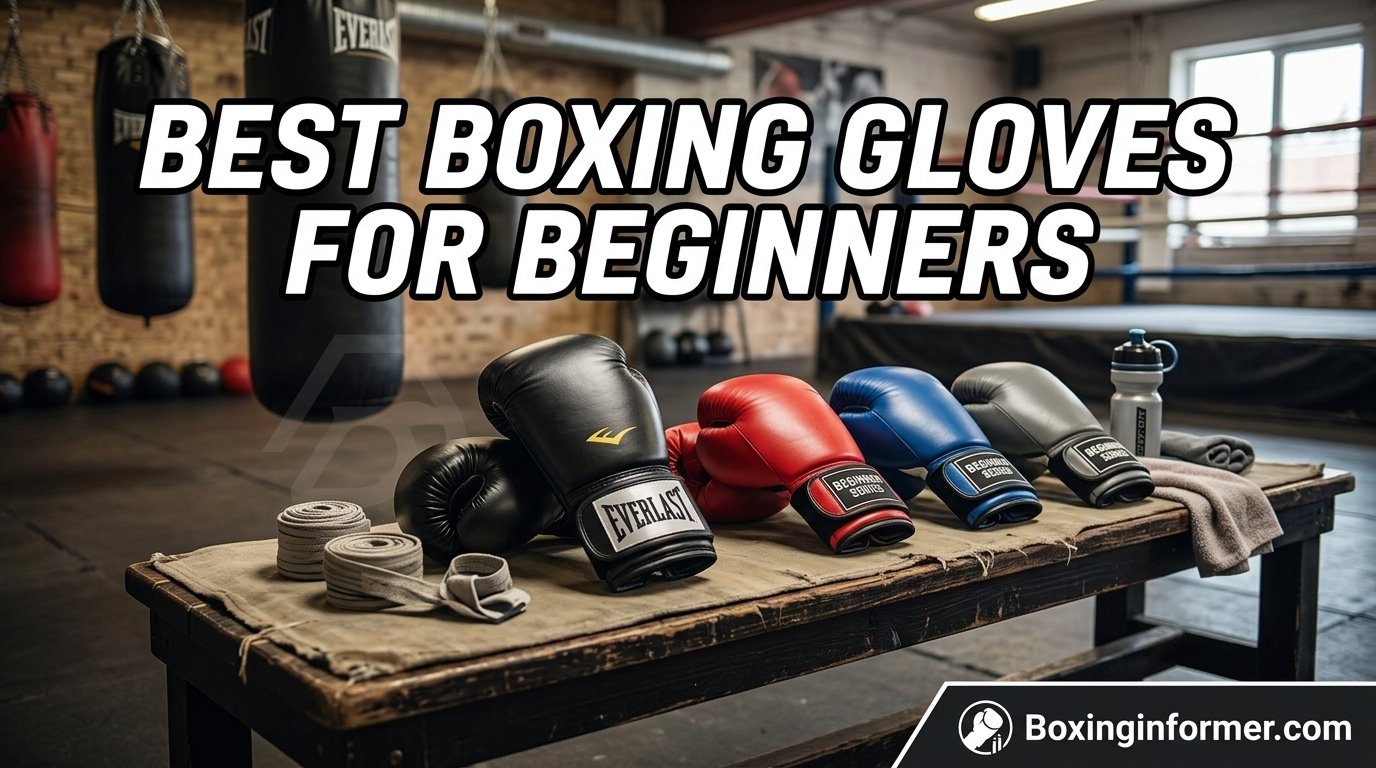
Best Boxing Gloves for Beginners: 10 Picks That Protect Your Hands and Your Budget
Your first pair of gloves shapes how fast you learn, how safe your wrists feel, and whether you actually look forward to training. Here is how to choose well, plus honest takes on ten gloves worth your attention.

What a Beginner Glove Really Needs
Walk into any gym on a Saturday morning and you will see the same scene play out. A newcomer stands in front of a heavy bag wearing gloves they grabbed in a hurry, throwing jabs that feel awkward, while the veteran two bags over wears something that looks nearly identical. From a few feet away, all boxing gloves look alike. Up close, and after a few weeks of training, the differences become impossible to ignore.
The truth is that beginners are in a strange position. You do not yet know what you like, you do not know how your hands will feel after forty minutes on the bag, and you probably have not decided whether boxing will become a long-term habit. That uncertainty makes buying gloves stressful. Spend too little and you may end up with flimsy padding that leaves your knuckles sore. Spend too much and you might pay for features you will not appreciate for another year.
This guide exists to remove that guesswork. We looked at ten popular gloves, from lean budget picks to a premium option that will last you years, and organized them around what a first-timer actually cares about: comfort, wrist support, protection, durability, and value. Before we get to individual reviews, though, let’s talk about what separates a good beginner glove from a merely cheap one.
Protection comes first
A beginner’s hands are not conditioned. The small bones across the back of your hand, the knuckles, and the thumb joint all need time to adapt to repeated impact. A glove with thin or uneven padding transfers shock straight into those structures. The first requirement is simple: dense, well-distributed foam across the knuckle area, with enough cushioning over the back of the hand that a mis-aimed punch does not hurt you.
Wrist support keeps you training
Many new boxers blame their technique for sore wrists when the real culprit is a loose or flimsy closure. A secure hook-and-loop strap that wraps well past the wrist keeps your joint aligned when a punch lands. Combined with properly applied hand wraps (we cover those in a later section and in our guide on how to wrap hands for boxing), the right closure is your first line of defense against wrist strain.
Comfort determines consistency
The best glove is the one you will actually wear three times a week. If the interior lining is scratchy, if the thumb feels cramped, or if the gloves trap heat and moisture, training turns into a chore. Comfort is not a luxury item for beginners. It is the thing that keeps you coming back through the awkward first month.
Versatility saves money
Experienced fighters own separate gloves for bag work, sparring, and mitts. You do not need that. A good all-purpose training glove, typically in the 12 to 16 ounce range, can handle bag rounds, pad work, and light technical drills while you figure out where your training is headed. If you are still deciding whether to commit, our overview of how to start boxing walks through what your first few weeks might look like.
Mistakes beginners make when buying gloves
After watching countless newcomers shop for their first pair, a few patterns show up again and again. The most common is buying purely on looks. Bright colors and bold logos are fun, but they say nothing about padding quality or fit. The second is buying too light. A 10 ounce glove feels sleek and fast, yet it offers less cushioning than a 14 or 16 ounce pair, which is exactly what a developing hand needs.
The third mistake is ignoring the return policy. Even careful shoppers sometimes get a size wrong, and online retailers generally make exchanges easier than gyms do. Before you commit, glance at the return window so a poor fit does not become a wasted purchase. Finally, many beginners forget that they will need hand wraps, so they spend their entire budget on gloves and end up training without proper hand support. Set aside a little money for wraps from the start.
How much should you spend?
There is no magic number, but a useful way to think about it is by commitment level. If you are curious, spend as little as makes sense and stay in the budget tier. If you have signed up for classes or intend to train a few times weekly, the mid-range is where value tends to peak, since padding quality and closure design improve noticeably without a steep price jump. Premium gloves make sense once you are certain boxing is part of your routine. Matching your spend to your commitment keeps you from overpaying or under-protecting yourself.
What to expect from your first pair
It helps to set honest expectations. Your first gloves will feel a little strange. The padding may seem bulky, the strap might feel awkward to tighten, and your punches will land with a muted thud that is quite different from the crisp pop you hear in videos of professionals. That is completely normal. The goal of a beginner glove is not to make you feel like a fighter. It is to give you a safe, comfortable platform to learn on.
Within a few sessions, you will start to notice small things: how the glove sits when you make a fist, how the strap feels after three rounds, and whether any seam rubs against your skin. Pay attention to those details. They will teach you what to look for when you eventually buy your second pair, and by then you will be an informed shopper who knows exactly what suits your hands.
Glove Weight and Sizing: Getting the Ounces Right
Boxing gloves are sold by weight, measured in ounces, and this number confuses almost every newcomer. It does not describe how heavy the gloves feel on your hands in a simple sense. It describes the overall volume of the glove, and in practice, the amount of padding inside. A higher ounce rating generally means more cushioning and more protection, both for you and for any partner you spar with.
What the ounce numbers mean
Gloves commonly come in 8, 10, 12, 14, 16, and 18 ounce versions. Lighter gloves, such as 8 and 10 ounce models, are associated with competition, where less padding is permitted. Heavier gloves, 14 and 16 ounces and up, are standard for sparring because they soften impact. The 12 ounce size sits in the middle and is a popular choice for general bag work for lighter athletes.
As a beginner, the instinct is often to pick a lighter glove because it feels quicker and less tiring. Resist that urge. Extra padding is forgiving while your technique is developing, and it protects your hands while they toughen up. Your shoulders will also thank you: while heavier gloves do feel more demanding at the end of a long round, they build endurance that pays off later.
A general weight guide by body weight
Gyms and brands vary in their recommendations, but the table below reflects commonly used guidance for training gloves. Treat it as a starting point rather than a rule.
| Body weight | Bag and pad work | Sparring |
|---|---|---|
| Under about 130 lb (59 kg) | 10 to 12 oz | 14 oz |
| About 130 to 165 lb (59 to 75 kg) | 12 to 14 oz | 14 to 16 oz |
| About 165 to 190 lb (75 to 86 kg) | 14 to 16 oz | 16 oz |
| Over about 190 lb (86 kg) | 16 oz | 16 to 18 oz |
If you only plan to buy one pair and you are unsure, 14 ounces is a reasonable middle ground for many adults, and 16 ounces is the safest all-around option if you think you might spar. For a much deeper breakdown that includes hand length and circumference, read our dedicated guide on what size boxing gloves do I need.
Fit matters as much as weight
Beyond ounces, the glove has to fit your hand. When you slide it on, your fingers should reach the end of the finger compartment without bunching, and your thumb should sit naturally in its channel. If your fingertips are crushed against the end, the glove is too small. If there is a big gap, your hand will slide around on impact, and that sliding is a common cause of knuckle and wrist irritation.
Remember that you will wear hand wraps underneath, which take up a bit of space. Try gloves on with wraps if you can, or leave a little room when buying online. Most beginners find that a snug-but-not-tight feel with wraps on is just right.
Women’s and youth sizing
Some brands offer women’s specific cuts, which usually have a narrower palm and shorter finger length. The Everlast Elite 2 women’s glove in our list is built around that idea. If you have smaller hands, a women’s or youth-specific glove can deliver a noticeably better fit than simply buying a lower weight in a unisex model.
Common sizing mistakes to avoid
One frequent error is assuming your usual clothing size predicts your glove size. It does not. Glove sizing is driven by hand dimensions and the intended use. Another mistake is choosing a weight because a friend uses it. Your friend may be heavier, lighter, or training for something different, so their glove might be poorly matched to you.
People also forget to account for wraps. A glove that feels perfect on a bare hand can be uncomfortably tight once you add a few layers of cloth. If you are between sizes, lean toward the slightly roomier option, since hand wraps and a brief break-in period will tighten the fit. A glove that is too snug restricts blood flow and can leave your fingers numb halfway through a round.
Quick fit test at home
When your gloves arrive, put your wraps on, slide the glove in, and close the strap. Make a fist and hold it for ten seconds. You should feel supported, not squeezed. Shake your hand lightly. Nothing should slide or rattle. Then throw a few easy punches into the air to check that the thumb and fingers move naturally. If anything feels off, exchange them before you use them heavily, since many retailers only accept returns on lightly used items.
Padding, Materials, and Closures: What You Are Paying For
Once you have a weight and size in mind, the next layer of decisions involves construction. Two gloves with the same ounce rating can feel completely different in use, and the reasons come down to foam, shell material, and closure design.
Foam and padding layers
Inside every glove is a block or series of layers of foam. Cheaper gloves often use a single, softer foam that feels plush in the store but compresses quickly, leaving you with less protection after a few weeks. Better gloves use multi-layer padding, with a denser layer closer to the knuckles and a softer layer nearer your hand. Some budget-friendly designs add a gel-infused layer to improve shock absorption, which is the approach you will see on the Sanabul Essential Gel.
You cannot see the foam, but you can feel it. Press your thumb into the knuckle area. It should compress, then push back with some resistance. If it collapses like a sponge with no rebound, expect it to flatten out quickly. If it feels like a brick, it may be a hard-hitting sparring glove better suited to experienced users.
Shell materials: leather versus synthetic
Genuine leather gloves have a reputation for durability and a classic feel, but they come with a higher price and need more care. Synthetic leather, often described as PU or vegan leather, is lighter on the wallet, easier to clean, and perfectly adequate for beginners. Most gloves in this guide use synthetic or synthetic-blend shells, which is exactly what most new boxers should be buying. Always check the product listing for the specific material, since brands update their lines from time to time.
Closure style
Almost every beginner glove uses a hook-and-loop strap, commonly called Velcro. The best versions have a wide strap that wraps around the wrist and secures at the back of the glove, giving you a solid, supported feel. Lace-up gloves exist, but they are intended for fighters who have a partner or coach to tie them, and they are not practical for solo training.
Look for a closure that lets you tighten the glove with one free hand. You will be doing this repeatedly during a workout, often with the opposite glove already on, so ease of use matters more than most people expect.
Ventilation and lining
Moisture is the silent enemy of boxing gloves. A hot, sweaty glove becomes smelly quickly, and the lining breaks down faster over time. Some gloves include mesh panels or perforated palms to improve airflow. Others use moisture-wicking linings. These features do not change how a glove protects you, but they have a big effect on comfort and on how long the glove stays fresh. We will return to this topic in the care section.
Thumb attachment
Many modern training gloves attach the thumb to the body of the glove, which reduces the chance of an accidental thumb injury or an eye poke during sparring. It is a small detail, but a worthwhile one if you plan to do any partner work.
Why durability varies so much
Two gloves can look identical in photos and age very differently. The stitching is a good clue. Tight, even seams around the thumb, cuff, and palm hold up under repeated impact, while loose or uneven seams tend to fray first. The same goes for the strap: a wide, firmly attached strap lasts longer than a narrow one that is only lightly sewn in.
Foam density also matters. Padding that begins life soft often feels great for the first few weeks, then flattens. Denser foam can feel stiff initially, but it usually keeps its shape longer. For a beginner, aim for a balance where the glove feels cushioned without being squishy. And remember that how you treat your gloves is just as important as how they are made. Gloves that are dried after every session routinely outlast those that are left in a bag.
Features that sound fancy but matter less
Marketing language can be dazzling. Terms such as advanced shock technology or competition-grade design appear on many listings. Be cautious with these. They are not regulated terms, and they rarely tell you anything concrete about how a glove will feel on your hand. Rely on user reviews, size charts, and the basics of fit and padding instead. A modest, well-fitted glove always beats a feature-packed glove that does not suit your hand.
Palm design and grip bar
Inside the glove, you will usually find either a grip bar that you hold or a more open palm area. Some beginners find a grip bar helps them form a proper fist, while others prefer a more open design that feels natural. There is no universal winner. If you have ever felt that your fist collapses or your fingers cramp mid-round, a glove with a well-shaped grip bar may help. If you have larger hands, the open design can feel less restrictive.
Whichever you choose, make sure the interior is smooth. Rough stitching or exposed seams inside the glove can irritate your skin during long rounds, particularly when you are sweating. Moisture-friendly linings tend to reduce this problem and make the glove feel more comfortable from the very first session.
Quick Comparison Table: All 11 Gloves at a Glance
Before we dig into the individual reviews, here is a side-by-side look at where each glove fits. The notes reflect each model’s general positioning. Exact materials, weights, and sizes can change, so confirm the specifics on the current listing before you buy.
| Glove | Best For | Price Tier | Standout Trait |
|---|---|---|---|
| RDX Pro Training | All-round gym training | Mid | Balanced padding and support |
| Sanabul Essential Gel | First-time buyers | Budget | Gel-infused cushioning |
| FIVING Boxing Gloves | Casual bag work | Budget | Easy value pick |
| Everlast Prostyle 2 | Trusted brand lovers | Mid | Classic training feel |
| Hayabusa S4 | Committed beginners | Premium | Refined fit and build |
| Adidas Hybrid 80 | Versatile training | Mid | Bag, pads, light sparring |
| Venum Contender 1.5 | Style plus function | Mid | Sleek design, reliable build |
| SAEEPABUL S200 | Hot, sweaty sessions | Budget to mid | Cooling tech |
| Everlast Elite 2 (women’s) | Smaller hands | Mid | Women’s specific fit |
| SAWANS Boxing Gloves | Tightest budgets | Budget | Lowest cost of entry |
Every glove in the table gets its own honest write-up below, grouped loosely by who it suits best, so you can jump straight to the ones that match your budget and goals.
How to read the price tiers
Prices on Amazon move around, so rather than quote numbers that may be outdated by the time you read this, we group gloves into tiers. Budget gloves are the entry level, mid-range gloves usually offer better padding consistency and longer life, and premium gloves charge extra for refinement, closures, and fit. As a beginner, a budget or mid-range glove is almost always the right call.
Our quick picks
- Best all-rounder: RDX Pro Training for its balance of protection and support.
- Best for tight budgets: Sanabul Essential Gel and SAWANS, depending on how far your budget stretches.
- Best for sticking with it long term: Hayabusa S4, if you are confident you will train regularly.
- Best for women and smaller hands: Everlast Elite 2.
- Best for hot gyms: SAEEPABUL S200 with its cooling design.
Matching a glove to your goal
Different goals call for different priorities. If your main reason for training is fitness, comfort and ventilation matter most, so look at the SAEEPABUL S200 or a lighter-use pick such as the FIVING. If you want to learn technique in a gym with a coach, a dependable mid-range glove like the RDX Pro Training, Everlast Prostyle 2, or Adidas Hybrid 80 gives you room to grow. If you are drawn to the competitive side of the sport, the Hayabusa S4 or a similarly built glove is the safer long-term investment.
It is also worth asking your gym whether it has glove preferences. Some gyms require 16 ounce gloves for sparring nights, and some lend gloves to newcomers for the first week. A short conversation with a coach can save you from buying the wrong thing.
RDX Pro Training and Sanabul Essential Gel: Two Crowd Favorites
These two gloves show up in beginner recommendations again and again, and for good reason. They sit in the sweet spot where price, comfort, and protection meet, and both are easy to find. They also represent two slightly different philosophies. The RDX leans toward a structured, supportive feel, while the Sanabul leans toward soft, gel-assisted cushioning at a friendlier price.

RDX Pro Training Boxing Gloves
- Training and bag work
- Hook-and-loop wrist strap
- Mid-range pricing
RDX has built a name by outfitting gyms and amateur fighters, and the Pro Training glove reflects that practical background. It is designed for general training: heavy bags, pads, and light drills. The padding is intended to protect knuckles through sessions that run long, and the wrist closure is built to hold your joint steady when you land.
What stands out most is how settled the glove feels on your hand. Beginners often notice that cheaper gloves shift around or leave pressure points. A well-fitted pair of RDX gloves tends to feel consistent from the knuckles back to the wrist, which lets you concentrate on technique instead of adjusting your hands every round.
Pros
- Supportive wrist closure
- Balanced padding for bags and pads
- Easy to find in multiple sizes
- Suitable for a wide range of hand sizes
Cons
- Can feel stiff until broken in
- Costs more than the cheapest options

Sanabul Essential Gel Boxing Gloves
- Gel-infused padding
- Easy-on closure
- Budget-friendly
Sanabul has become popular with first-time buyers largely because it targets exactly that audience. The Essential Gel glove is marketed around its gel-infused cushioning, which aims to absorb some of the shock that travels through your knuckles when you hit a heavy bag. For someone whose hands are not yet used to impact, that is a welcome feature.
The glove is a straightforward, no-nonsense training option. It will not win awards for refinement, but it gets the fundamentals right: comfortable interior, a closure that is easy to manage with one hand, and a price that does not make you wince. If you are unsure whether boxing is for you, this is the kind of glove that lets you find out without a big commitment.
Pros
- Gel cushioning for hand comfort
- Affordable entry point
- Simple closure that is easy to use
- Good for bag work and intro classes
Cons
- Padding may compress sooner than premium gloves
- Not ideal for heavy, frequent sparring
How the two compare in daily use
In everyday training, the difference between these gloves shows up in small moments. The RDX tends to feel firmer and more structured, which many people read as confidence and support. The Sanabul feels softer and more forgiving on first contact, a plus when your knuckles are still adjusting. Over a couple of months, the RDX is likely to hold its shape slightly better, while the Sanabul remains comfortable and a sensible value.
If you are torn, think about where you will train. In a gym with coaches and regular partner drills, the RDX’s supportive feel is a good match. If you train mostly at home on a hanging bag, the Sanabul’s budget-friendly comfort is hard to argue with. Both are available through the links above, and both come in a range of sizes to suit different hands.
Which one should you choose?
If you want a glove with a more structured, supportive feel and you are willing to spend a little more, the RDX is the stronger choice. If cost is your main concern, or you simply want something comfortable to test the waters, the Sanabul delivers. Either way, you will be fine for your first several months of training.
FIVING and SAWANS: Budget Gloves That Do the Job
Not everyone wants to spend serious money on their first pair of gloves, and that is a perfectly reasonable position. Plenty of people try boxing for a few weeks, decide it is not their thing, and would rather not have a pricey pair sitting in a closet. The FIVING and SAWANS gloves serve that need. They are lower-cost options that still cover the basics for light training and fitness-oriented bag work.
A quick word of honesty: budget gloves involve compromises. The padding tends to be thinner or less consistent than in mid-range gloves, the closures may be less robust, and the materials are unlikely to last for years of heavy use. That is the trade-off for the price, and it is a fair one if you understand it going in.

FIVING Boxing Gloves
- Casual training
- Hook-and-loop closure
- Budget tier
FIVING is one of those Amazon-first brands that built its following on straightforward products at approachable prices. Their boxing gloves are aimed at people who want to hit a bag at home or in a garage gym without a big investment. The design is simple, the closure is quick to fasten, and the gloves come in a range of sizes.
These are best seen as a fitness glove. If your plan is cardio-style bag workouts a few times a week, they make sense. If you expect to spar regularly or train hard five days a week, you will likely want to step up to something with denser padding down the line.
Pros
- Very accessible price
- Quick, simple closure
- Fine for fitness-style bag work
Cons
- Not built for frequent hard sparring
- Padding durability may be limited over time

SAWANS Boxing Gloves
- Budget bag gloves
- Strap closure
- Entry-level
SAWANS sits at the very affordable end of the spectrum. It is the sort of glove you buy when you want to try shadowboxing with resistance, attend a free community class, or give a teenager a first taste of the sport. It does what a basic training glove should do, and it does it cheaply.
Because it is a budget model, keep your expectations realistic. Pair it with properly applied hand wraps and keep your sessions moderate while your hands adapt. If you stay with boxing, plan on upgrading within a year. If you do not, you will not have lost much.
Pros
- One of the most affordable ways to start
- Good for trying the sport
- Lightweight feel for fitness workouts
Cons
- Basic padding and materials
- Not meant for sparring
Getting the most from a budget glove
You can stretch the life and comfort of an inexpensive glove with a few habits. First, always wear wraps. They protect your hand and keep sweat away from the lining. Second, dry the gloves thoroughly after every use. Third, keep sessions moderate while your hands toughen up. Finally, inspect the stitching and strap every few weeks. Catching a loose seam early can prevent it from turning into a full tear.
There is no shame in a budget start. Plenty of accomplished boxers began in basic gloves and upgraded only once they understood what they wanted. The goal of a first pair is to get you training safely, and these options can do that for a modest outlay.
When budget gloves make sense
Choose a budget pair if you are testing the sport, training casually for fitness, buying for a younger family member, or need a backup pair for a home bag. Avoid them if you plan to spar, if your gym requires specific gloves for partner work, or if you already know you will train several times a week. Spending a little more up front often saves money, since cheap gloves tend to need replacing sooner.
Everlast Prostyle 2 and Everlast Elite 2: A Legacy Brand Worth Knowing
Everlast has been part of boxing culture for over a century, and walking into almost any gym you will spot the name on a bag, a pair of gloves, or a wall of equipment. That familiarity brings a certain comfort when you are new. You know you are buying from a company that has outfitted generations of boxers, and the gloves tend to deliver a classic, predictable training feel.

Everlast Prostyle 2
- General training
- Hook-and-loop closure
- Mid-range tier
The Prostyle line is one of Everlast’s best-known training families, and the Prostyle 2 continues that tradition as a dependable all-purpose glove. It is built for heavy bag rounds, mitt work, and general gym use. The look is traditional, and the feel is familiar to anyone who has trained in a typical boxing gym.
For beginners, the draw is simplicity. You get a recognizable brand, a straightforward design, and a glove that works for the most common beginner activities without asking you to understand a long list of technical features. It may not be the most cutting-edge option in this guide, but it is a reliable place to start.
Pros
- Trusted, long-standing brand
- Suits bag work and pad drills
- Easy to find replacements and sizes
Cons
- Design is more traditional than modern rivals
- May feel firm at first

Everlast Elite 2 (Women’s)
- Women’s fit
- Training and bag work
- Mid-range tier
Women’s specific gloves exist for a practical reason: many women have narrower hands and shorter fingers, and a unisex glove can feel loose or bulky no matter which weight you pick. The Everlast Elite 2 women’s version is cut with that in mind, so the finger channels and palm width should feel more natural for smaller hands.
That better fit pays off in comfort and control. When the glove sits properly, your fist closes cleanly, your wrist stays aligned, and you spend less time fiddling with the strap. It is a strong choice for women who have tried a generic glove and found it awkward, and for anyone with smaller hands regardless of gender.
Pros
- Cut for narrower hands
- Familiar Everlast construction
- Good for training and fitness
Cons
- Limited fit range for larger hands
- Check size chart carefully before ordering
The value of a heritage brand
There is a quiet advantage to buying from a company with long experience. Everlast has refined its patterns and sizing over many decades, which means fit tends to be consistent from one model to the next. If you buy a pair of Prostyle gloves and love them, you can usually pick another Everlast glove later and expect similar proportions. That predictability reduces risk for an online buyer who cannot try before purchasing.
Brand familiarity also helps in practical ways: replacement straps, matching hand wraps, and accessories are easy to find, and you will see plenty of other people in your gym wearing similar gear, so you can ask them how theirs have held up. That kind of real-world feedback is often more valuable than any spec sheet.
Training with a classic glove
Both Everlast gloves are well suited to the types of sessions most beginners do: rounds on a heavy bag, pad work with a coach, and basic technique drills. Their design is intentionally uncomplicated, which makes them easy to live with. You tighten the strap, make a fist, and get to work.
One thing to remember with traditional training gloves is that the first week or two can feel firm. The foam and shell need time to relax. If you find yourself frustrated early on, give them a bit of patience and keep your sessions short. Most people end up appreciating the stable, no-fuss feel once the gloves have settled.
Prostyle versus Elite: how to decide
If your hands are average to large, the Prostyle 2 is the more natural pick. If your hands are on the smaller side, or if you want a glove designed specifically around women’s fit, go with the Elite 2. In both cases, take the time to measure your hand and compare it with the brand’s size chart instead of relying on weight alone.
Hayabusa S4: The Premium Step Up
Every so often a beginner decides, quite sensibly, that they would rather buy one excellent pair of gloves than two or three mediocre ones. If that sounds like you, and you are already confident that boxing will be a regular part of your week, the Hayabusa S4 deserves a hard look.

Hayabusa S4
- Premium build
- Secure wrist design
- Long-term training
Hayabusa built its reputation on thoughtful design and strong attention to detail, and the S4 is aimed at people who want a polished glove without jumping to competition-level pricing. The emphasis is on fit, wrist stability, and consistent protection through long sessions.
The biggest difference you notice compared with budget gloves is how everything feels coordinated. The padding behaves predictably, the closure holds your wrist firmly, and the glove tends to keep its shape over time. For a beginner, that translates into fewer distractions and more focus on learning your jab, cross, and hook.
Of course, it costs more, and not everyone needs it on day one. But if you value gear that lasts, and if you have the budget, buying the S4 first can be cheaper in the long run than replacing lower-cost pairs over and over.
Pros
- Refined fit and secure wrist support
- Built to last through regular training
- Comfortable for longer sessions
Cons
- Higher price than most beginner gloves
- May be more than a casual user needs
What makes a premium glove feel different
The gap between a mid-range and premium glove is subtle but real. It shows up in the way the glove wraps your hand, how the padding spreads impact, and how the closure keeps your wrist locked in place. Over a long workout, these small advantages reduce fatigue and keep your form cleaner, because you are not constantly compensating for a glove that shifts or pinches.
Premium gloves also tend to age more gracefully. Padding retains its shape longer, the shell resists cracking, and the closure remains firm. If you are the sort of person who buys once and uses it for years, these qualities add up. If you prefer to experiment with different gear, a mid-range option may suit you better, and you can always move up later.
Living with the S4 day to day
Because a premium glove is an investment, it deserves a bit of extra care. Dry it after each workout, store it somewhere ventilated, and avoid tossing it into a hot trunk. With reasonable treatment, the S4 should keep looking and feeling good through many months of training.
If you are on the fence, consider how you handled earlier gear purchases. People who enjoy quality equipment, and who tend to use things for years, usually appreciate premium gloves more than those who frequently switch hobbies. There is no wrong answer here. Boxing should be affordable and enjoyable, and the best glove is the one that fits your life and your wallet.
Who should spend more?
Think about how you will actually train. If you attend a gym three or more times per week, plan to join sparring sessions eventually, or simply want gear you will not have to think about for a long time, a premium glove is a justified purchase. If you are still testing the sport, save your money and revisit this option in a few months.
It also helps to think about total cost. A premium glove that lasts several years often works out cheaper per session than a budget pair that needs replacing after a few months of regular use.
Adidas Hybrid 80 and Venum Contender 1.5: Versatile Brand-Name Options
Adidas and Venum come from different corners of the combat sports world, but both make gloves that suit beginners who want something versatile, well made, and good looking. Adidas leans on its broad sportswear heritage, while Venum has deep roots in martial arts and MMA culture.

Adidas Hybrid 80
- Bag, pads, light sparring
- Wrist strap closure
- Mid-range tier
The name says it all. The Hybrid 80 is designed as a flexible training glove that can handle several jobs: bag work, pad drills, and light partner work. If you do not want to buy separate pairs for different activities, that flexibility is attractive.
Adidas gloves also tend to look clean and understated, which matters more than people admit when you are building a gym habit. A glove you like looking at is a glove you reach for.
Pros
- Designed for multiple training uses
- Recognizable brand with consistent quality
- Clean, simple styling
Cons
- Not the cheapest in its tier
- Jack-of-all-trades design may not excel at one task

Venum Contender 1.5
- Training and sparring
- Bold styling
- Mid-range tier
Venum gloves are easy to spot because of their sharp design, and the Contender 1.5 is a popular entry in the lineup. It is geared toward gym training and gives newcomers a glove that looks the part without needing a premium budget.
Comfort is the main selling point here. Many users appreciate the glove’s snug interior and secure closure, which together keep the hand stable through bag rounds. If you enjoy the aesthetic of combat sports gear and want something that feels purposeful, the Contender 1.5 is a good fit.
Pros
- Distinctive, modern look
- Secure closure and stable fit
- Works for general gym training
Cons
- Sizing can run snug for some hands
- Style-forward design is not for everyone
Looks, comfort, and motivation
It may sound superficial, but the way your gear looks can influence your consistency. Many people find that they train more when they enjoy their kit, from clean Adidas lines to Venum’s sharper graphics. There is nothing wrong with factoring style into your decision, provided the fundamentals of fit, padding, and wrist support are in place. When two gloves are close in performance, choose the one that makes you want to show up.
Both brands also offer broad size ranges and colors, so you are likely to find a version that suits your hand and your taste. As always, check the size chart closely and confirm the latest details on the product page, since brands update materials and colors regularly.
Sparring readiness
If you think you might eventually spar, both gloves are worth considering, provided you choose a heavier size such as 14 or 16 ounces. Always check with your coach, since many gyms have specific rules for partner work and may prefer certain weights. Never spar in gloves that are too light or too worn. The extra cushioning protects both you and your partner, and it is one of the simplest ways to keep training sessions friendly and injury free.
Choosing between the two
Pick the Adidas Hybrid 80 if you want one glove that covers many bases and prefer understated styling. Choose the Venum Contender 1.5 if you like a more combat-sports look and want a snug, secure feel. Both sit comfortably in the mid-range, and neither will let you down during your first year.
SAEEPABUL S200: The Cooling Tech Option
Anyone who has trained in a warm gym knows the misery of damp gloves. After a few rounds, your hands feel like they are sitting in a sauna, and the smell afterward is a story for another day. The SAEEPABUL S200 addresses that problem with cooling-focused design.

SAEEPABUL S200
- Cooling tech
- Bag and pad work
- Budget to mid tier
The S200 is built around the idea that airflow and heat management matter. The cooling design aims to keep your hands more comfortable during extended sessions, which can make a real difference if you train in a hot climate, a home garage, or a crowded gym with limited ventilation.
Cooler gloves are also friendlier to the glove itself. Less trapped moisture means less odor buildup and slower breakdown of the lining. While you will still need to air out and care for them (more on that shortly), a ventilated design gives you a head start.
Pros
- Designed to keep hands cooler
- Helps reduce moisture and odor
- Good value for the feature set
Cons
- Lesser-known brand than the big names
- Cooling benefit varies by climate and user
Keeping gloves fresh in warm conditions
If you train in heat, a few extra steps go a long way. Bring a spare pair of hand wraps and swap them mid-session if they become soaked. Open the gloves fully after each workout and place them where air can circulate, ideally with their cuffs spread open. Avoid leaving them in a car, which can bake moisture into the lining and shorten their life.
Some people also slip moisture-absorbing inserts or deodorizing sachets inside the gloves between sessions. These are inexpensive and can make a noticeable difference. Combined with a ventilated glove like the S200, they help you maintain fresher, longer-lasting gear.
Who should look at other options?
If your gym is cool and dry, or you train only occasionally, you may not benefit much from cooling technology and could put the money toward better padding instead. If you prioritize a trusted household name, the Everlast or Adidas options might feel more reassuring. And if you plan to spar often, a denser, heavier glove from a more established line will usually be a wiser buy. Cooling gloves are best seen as a comfort upgrade for people who train in warm conditions and want a more pleasant experience.
Is cooling tech worth it?
If you sweat heavily, live somewhere humid, or train in a space without air conditioning, yes, it can improve your sessions noticeably. If you train in a cool, well-ventilated gym a couple of times a week, it is a nice extra rather than a necessity. Either way, do not skip the hygiene habits. Wearing clean hand wraps every time and drying your gloves after every workout will do more for freshness than any single feature.
Gear That Goes With Your Gloves: Wraps, Shoes, and Extras
Gloves are the headline purchase, but they are only one piece of a safe, comfortable setup. Beginners who skip the supporting gear often end up with sore hands, slippery footing, or smelly equipment, and they blame the gloves when the real issue is something else. Here is what to pair with your new pair.
Hand wraps: the non-negotiable accessory
Gloves cushion the outside of your fist. Hand wraps stabilize the bones, joints, and tendons inside it. Without wraps, even the best glove leaves your wrist and knuckles more exposed than they should be. Wraps also absorb sweat, which protects the glove lining and keeps things fresher.
Wraps come in different lengths and materials. Longer wraps give more coverage and are popular with people who want maximum support, while shorter or elastic types are quicker to put on. If you are not sure which to buy, our roundup of the best hand wraps for boxing covers the options in detail. And if you have never wrapped your hands before, spend ten minutes with our step-by-step walkthrough on how to wrap hands for boxing. It is a skill that pays back every single session.
Boxing shoes
Many beginners train in running shoes or cross-trainers, and that works for a while. But boxing is a footwork sport. Pivoting, shuffling, and changing direction all put sideways forces on your feet that standard sneakers are not designed for. Dedicated boxing shoes are lightweight, flexible, and have soles built for smooth rotation on gym floors. If you are curious about picking a pair, take a look at our guide to the best boxing shoes.
A gym bag with ventilation
Do not zip your damp gloves into a sealed bag and forget about them. A bag with ventilation, or at least a separate compartment you can leave open, makes a big difference in how your gloves smell and age.
Mouthguard and protective gear for sparring
Once you start sparring, you will need a mouthguard, and many gyms also require headgear. You do not need these for bag work, but plan ahead if sparring is on your roadmap. It is better to buy protective gear before you need it than to borrow ill-fitting equipment on the day.
A simple starter kit checklist
- Training gloves in the right weight and size
- At least two pairs of hand wraps, so one is always clean
- Supportive footwear suited to your training space
- A ventilated bag to carry and dry your gear
- A towel and water bottle for every session
Training surfaces and footwear considerations
Where you train affects what you wear on your feet. Wooden or sprung gym floors reward the thin, flexible soles found on boxing shoes, while carpeted or rubber surfaces can grip too aggressively and strain your knees if you pivot in the wrong shoes. If you are unsure whether a shoe from another sport could stand in, wrestling shoes are a common stand-in, though they are not identical to boxing shoes, so check how the two compare before you buy.
It also helps to keep your kit organized. A small pouch for wraps, a towel, and a mouthguard prevents the scramble of looking for gear before class. The easier it is to pack your bag, the more likely you are to keep a regular training habit.
Care, Break-In, and Your First Weeks of Training
You have chosen your gloves. Now the question becomes how to make them last and how to settle into training without injury. A few habits in the first month set the tone for everything that follows.
Breaking in new gloves
New gloves are often stiff. The padding has not yet molded to your hand, and the closure may feel rigid. That is normal. Over the first several sessions, the foam softens slightly and conforms to your fist. You can speed the process by simply using them for light bag work, flexing and closing your fist while wearing them, and avoiding the temptation to push intensity right away. For specific techniques, read our guide on how to break in boxing gloves.
Cleaning and drying after every session
Moisture is what breaks gloves down. The simplest habit you can build is to open your gloves wide after training and let them air dry in a well-ventilated spot, away from direct heat or sunlight. Never leave them in a hot car or a closed bag. Wipe the interior and exterior with a slightly damp cloth when needed, and use a glove-safe deodorizer if odor starts to build. When you want to do a proper refresh, our walkthrough on how to clean boxing gloves covers the process safely.
Rotate and rest
If you train often, consider owning two pairs and alternating them. Gloves need time to dry completely, and a rest day between uses extends their life significantly. It is also a smart way to keep your training uninterrupted if one pair is drying or being cleaned.
Your first month on the bag
Resist the urge to hit as hard as you can from day one. Spend the first few weeks learning proper technique, such as how to keep your wrist straight, rotate your hips, and land with the first two knuckles. Short rounds with plenty of rest let your hands, wrists, and shoulders adapt. If you feel sharp pain, stop and reassess your wraps, glove fit, and form. Persistent discomfort is a signal worth listening to.
When to replace your gloves
Gloves do not last forever. Signs it is time to replace them include padding that feels flat or lumpy, a closure that no longer holds firmly, cracks or splits in the shell, and odor that will not go away even after cleaning. Training in worn-out gloves is a recipe for sore hands, so do not stretch them too far.
Building a simple weekly routine
Consistency beats intensity for new boxers. A manageable starting point is two or three sessions per week, each lasting thirty to forty-five minutes. Begin with a warm-up of skipping or light shadowboxing, practice basic punches on the bag in short rounds, and finish with core work and stretching. Rest days are part of training, and they give your hands and wrists time to recover.
As your technique improves, you can add more rounds, introduce pad work with a partner, and eventually consider light sparring if that interests you. Throughout, keep an eye on how your hands feel. Mild fatigue is normal, but sharp pain, swelling, or lingering numbness means it is time to ease off and check your wraps, fit, and form.
Hand wrap hygiene
Dirty wraps make dirty gloves. Rotate at least two pairs and wash them regularly. If you are unsure how, the care instructions printed on the packaging are a good starting point. Fresh wraps reduce odor, protect the glove lining, and are kinder to your skin.
Storing gloves between sessions
Where you keep your gloves matters almost as much as how you clean them. Store them in a cool, dry place, ideally with the cuffs open so air can circulate. Avoid stuffing them tightly into corners or leaving them under heavy items, which can crush the padding. Some boxers place a few sheets of newspaper or a dedicated glove dryer inside to draw out moisture. Simple habits like these can add months to the life of your equipment and keep it comfortable to wear.
Listening to your body
Finally, remember that gloves are only part of the equation. Sleep, hydration, warm-ups, and gradual progression all influence how your hands and wrists feel. If something hurts persistently, talk to a coach or a healthcare professional rather than pushing through. Boxing is a lifelong skill, and the people who last in it are the ones who train patiently and look after their bodies.
Frequently Asked Questions
What are the best boxing gloves for beginners?
The best choice depends on your budget and goals. The RDX Pro Training is a strong all-rounder, the Sanabul Essential Gel is a great low-cost starter, and the Hayabusa S4 is a premium option for people who know they will stick with the sport. Whichever you choose, prioritize fit, padding, and a secure wrist closure.
What weight boxing gloves should a beginner buy?
Most adult beginners are well served by 12 to 16 ounce gloves. Lighter people may be comfortable at 10 to 12 ounces for bag work, while heavier people and anyone planning to spar usually do better with 14 to 16 ounces. When in doubt, 14 or 16 ounces is a safe, forgiving choice.
Do I need hand wraps with beginner boxing gloves?
Yes. Hand wraps support your wrist and knuckles and keep sweat off the glove lining. Gloves alone do not provide enough joint stability, especially for someone whose hands are not yet conditioned.
Are cheap boxing gloves okay for a first pair?
They can be, as long as you understand the trade-offs. Budget gloves are fine for casual fitness bag work and for testing the sport. They usually have thinner or less durable padding, so avoid them for regular sparring or very frequent heavy training.
Can I use the same gloves for bag work and sparring?
Many beginners do, particularly with a 14 or 16 ounce all-purpose glove. Over time, serious boxers usually separate their gloves, using heavier, softer ones for sparring and slightly denser ones for the bag. For your first months, one versatile pair is enough.
How should boxing gloves fit?
They should feel snug with your wraps on, with your fingertips reaching the end of the finger area without being crushed. Your thumb should rest naturally, and the wrist strap should secure firmly. If your hand slides around, the glove is too big. If your fingers are cramped, it is too small.
How long do beginner boxing gloves last?
It depends on frequency and care. With regular use and good habits like drying and rotating pairs, a quality glove can last a year or more. Budget gloves may wear out sooner, particularly with heavy, frequent use.
Are women’s boxing gloves different from men’s?
Often, yes. Women’s gloves are usually cut with a narrower palm and shorter fingers to suit smaller hands. Anyone with smaller hands can benefit from them, so check the size chart instead of choosing based on gender alone.
How do I stop my boxing gloves from smelling?
Air them out after every session, keep them out of sealed bags, and wear clean hand wraps each time. Use a glove-safe deodorizer when needed, and consider a pair with ventilation or cooling features if you sweat a lot.
Do I need boxing shoes as a beginner?
Not immediately. You can start in supportive athletic shoes. As you progress, dedicated boxing shoes improve pivoting and footwork, which makes them a worthwhile upgrade. Wrestling shoes are sometimes used as a substitute, but they are not identical to boxing shoes.
Is it okay to buy boxing gloves online without trying them on?
Yes, if you measure carefully, read the size chart, and check the return policy. Order a size you can test with hand wraps on at home, and focus on fit, wrist security, and comfort during your first sessions.
What is the best boxing glove for a total beginner on a tight budget?
The Sanabul Essential Gel and SAWANS gloves are two of the more affordable options in this guide. If you can stretch your budget slightly, the RDX Pro Training offers stronger overall support and durability.
Final Verdict: Start Smart, Train Safe
Choosing your first pair of boxing gloves does not need to be complicated. Focus on the fundamentals: the right weight for your body and goals, a snug fit with hand wraps on, dense and even padding, and a closure that supports your wrist. Everything else is a bonus.
If you want one safe recommendation, go with the RDX Pro Training for its balance of comfort, support, and value. If money is tight, the Sanabul Essential Gel gives you a friendly start. If you are certain you will train for the long haul, the Hayabusa S4 is a worthwhile investment. Women and anyone with smaller hands should look closely at the Everlast Elite 2, and anyone who runs hot should consider the SAEEPABUL S200.
Whatever you pick, look after it, wrap your hands properly, and build your skills gradually. Good gloves will not turn you into a fighter overnight, but they will make every session more comfortable and every month of progress more enjoyable.
One last piece of advice: do not let the search for the perfect glove delay your first session. Any of the ten options in this guide will get you started safely, and the real learning happens once you are in the gym, throwing punches and noticing what works. Pick the glove that fits your hand and your budget, and get moving.