

Best Boxing Shoes: Ten Pairs That Help You Move Faster, Pivot Cleaner, and Stay Planted
A hands-on style buyer’s guide to the boxing shoes worth lacing up, with honest pros and cons, sizing help, and clear advice for every kind of boxer.

Ask any trainer what separates a fighter who looks smooth from one who looks stuck, and the answer usually starts at the floor. Your shoes are the only part of your body that touches the canvas, which means every pivot, slide, shuffle, and step-in punch passes through them first. When the shoes are wrong, you feel it everywhere: tired calves, rolled ankles, sticky turns, and a nagging sense that you are always half a beat late.
This guide walks through ten boxing shoes that boxers actually reach for, from mid-top models with serious ankle support to lighter low-cut options that feel almost like slippers. Instead of reciting spec sheets, we explain how each pair behaves in the situations that matter: working the heavy bag, drilling footwork, sparring, and moving around a ring. We also cover sizing, break-in, care, and the common mistakes that make people regret a purchase.
If you are brand new to the sport, it helps to read our walkthrough on how to start boxing alongside this guide, because shoes make far more sense once you understand what your feet are supposed to be doing. Ready? Let’s start with why this one piece of gear deserves real attention.
1. Why Boxing Shoes Matter More Than You Think
Most beginners spend their first budget on gloves, wraps, and maybe a mouthguard, then show up in whatever sneakers they already own. That works for a few weeks. Eventually, though, the limits of ordinary footwear show up, and they show up in your movement long before they show up in pain.
Boxing is played from the ground up
Every punch begins with a push. A jab that looks like it comes from the shoulder actually starts with the back foot driving into the floor, the hips rotating, and the front foot staying controlled enough to receive that energy. If your shoe grips too much, your foot sticks and your knee absorbs the twist. If it grips too little, your base slides out from under you at the exact moment you commit. Boxing shoes are designed to sit between those two extremes, with enough traction to hold and enough glide to rotate.
Weight, flexibility, and feel
Running shoes are built to cushion repeated forward impact. They have thick, springy midsoles and often a raised heel, both of which make you feel a little unstable when you move side to side. Boxing shoes go the other direction. The sole is thin, flat, and flexible so you can feel the floor and make small corrections instantly. The upper is lightweight so your feet do not feel like anchors during the last round of a long session.
Injury prevention
Boxers spend a huge part of every session on the balls of their feet, constantly shifting, pivoting, and changing direction. Poor shoes magnify the strain on ankles, arches, and knees. A mid-top design adds a measure of ankle stability, while a snug midfoot lock keeps the foot from sliding around inside the shoe. None of this replaces conditioning, but it removes an avoidable source of trouble.
Who really benefits?
- Beginners learning stance and weight transfer, who gain confidence from a stable, grippy base.
- Fitness boxers doing bag rounds and shadowboxing several times a week, who benefit from lighter, more comfortable feet.
- Amateur and competitive fighters who need predictable traction in sparring and in the ring.
- Coaches and mitt holders who spend hours on their feet and need ankle support and comfort.
Whichever group you belong to, the rest of this guide will help you match shoe characteristics to the way you train. Before we compare specific models, there is a common point of confusion worth clearing up.
Shop popular boxing shoes with current styles, sizes, and prices on Amazon.
Browse Boxing Shoes on Amazon2. Boxing Shoes vs. Wrestling Shoes vs. Regular Sneakers
Walk into a combat sports store and you will find shoes that look almost identical sitting on the same shelf, with one labeled for boxing and the other for wrestling. Several of the pairs reviewed below are marketed for both, so it is worth understanding what really differs. Our dedicated article, are wrestling shoes and boxing shoes the same, goes deeper, but here is the practical summary.
A quick word on how boxing footwear evolved
Boxers once trained and fought in heavy leather boots with stiff soles, a design inherited from earlier athletic footwear. Over time, fighters and coaches realized that lighter, more flexible shoes allowed faster movement and less fatigue, and the industry gradually shifted toward the lean, low-profile designs we see now. Modern boxing shoes combine that old-school ankle coverage with lighter materials, better ventilation, and soles made for pivoting. Understanding this evolution explains why you will still see a mix of traditional high-tops and sleek, sneaker-like shoes in every gym: both approaches work, and the right one depends on how you prefer to move.
That variety is good news for buyers. Whether you like the look of a classic leather boot or the feel of a modern mesh shoe, there is a design that fits your taste, and you can focus on the features that influence performance rather than worrying about what everyone else is wearing.
Where they overlap
Both styles use thin, flexible soles, lightweight uppers, and a close fit. Both are designed for indoor surfaces like canvas, mats, and gym floors. Many boxers happily train in wrestling shoes, and several products sit comfortably in both categories.
Where they differ
Traditional boxing shoes often have a higher shaft for ankle support, a slightly more structured heel, and a sole pattern engineered for pivoting. Wrestling shoes tend to prioritize mat grip and flexibility, and some have lower cuts and more flexible midfoot designs. The distinction has blurred over time, and what matters more than the label is how the shoe feels and how it grips your specific floor.
| Feature | Boxing Shoes | Wrestling Shoes | Regular Sneakers |
|---|---|---|---|
| Sole thickness | Thin and flat | Thin and very flexible | Thick and cushioned |
| Ankle support | Often mid-top or high-top | Varies, often mid-height | Usually low-cut |
| Pivot-friendly sole | Yes, designed for it | Usually good | Often grips too much or unevenly |
| Weight | Very light | Very light | Heavier |
| Floor feel | Excellent | Excellent | Muted |
| Best use | Bag work, sparring, ring | Mat sports, cross-training | Running, general gym |
Why not just use running shoes?
Running shoes have raised, cushioned heels and aggressive tread that bites into floors. During a pivot, that traction can lock the foot while your hips keep turning, which is a common route to knee and ankle strain. They also lift you away from the floor, making you less aware of your balance. For casual cardio boxing, you may get by, but anyone working on footwork will notice the difference quickly.
Compare boxing and wrestling-style shoes side by side before you decide.
See Boxing & Wrestling Shoes3. What to Look For Before You Buy
Product pages love to throw buzzwords at you, so it helps to know which characteristics genuinely change how a shoe performs. Here are the factors we weigh when comparing pairs, in rough order of importance.
Sole design and traction
The outsole is the heart of any boxing shoe. Look for a thin, non-marking rubber or suede-style sole with a flat profile and a smooth, circular area under the ball of the foot. That pivot zone is what lets you rotate without catching. Aggressive lugs or deep treads are a red flag for boxing, because they grab canvas and hardwood too eagerly. If you train on very slick floors, a slightly grippier pattern can be helpful, but you want predictability above all.
Ankle height
Boxing shoes come in three broad cuts. Low-cut models feel the lightest and give the most ankle freedom. Mid-tops cover the ankle bone and add stability without much weight. High-tops offer the most support and the most traditional look, though they can feel restrictive if you prefer free movement. Neither choice is universally correct. Boxers with a history of ankle trouble often lean mid or high, while speed-focused fighters often prefer lower.
Upper materials
Uppers are usually made of leather, synthetic leather, mesh, or a blend. Leather looks classic, molds to the foot over time, and tends to last, but it can run warm. Mesh breathes beautifully and keeps weight down, but it may wear faster near the toe and flex points. Synthetic blends try to split the difference. Think about how hot your gym gets and how many sessions per week you plan to do.
Weight and flexibility
You will be lifting your feet thousands of times per session, so ounces add up. Lighter shoes help with endurance and quick lateral movement. Flexibility matters because your foot needs to bend naturally at the ball. A stiff shoe fights you on every step, while a very floppy one may not support the midfoot enough.
Lacing and closure
Good lacing locks your heel and midfoot so your foot does not slide forward during stops. Look for sturdy laces, reinforced eyelets, and, if present, a strap or lace cover that keeps everything secure. Loose laces during sparring are both annoying and risky.
Fit and width
Fit is where many purchases succeed or fail. Some brands run narrow, others offer wider toe boxes, and a few cater specifically to wide feet. Check reviews for comments on sizing, and consult our section on sizing later in this guide. If you have wide feet, read about the wide-fit options in the eighth section.
Durability and price
Boxing shoes are not meant to be indestructible, but a well-built pair should survive months of regular training. Stitching quality, sole bonding, and upper reinforcement matter. Higher prices often buy better materials and construction, though some budget pairs offer excellent value if you accept lighter-duty materials.
| Priority | What to check | Why it matters |
|---|---|---|
| 1 | Flat, smooth pivot zone on the sole | Clean rotation protects knees and ankles |
| 2 | Snug heel and midfoot lock | Prevents sliding and blisters |
| 3 | Ankle height that suits you | Balances support and freedom |
| 4 | Breathable, light upper | Comfort and stamina in long sessions |
| 5 | Build quality | Determines how long the shoes last |
Match the shoe to your training surface
Surface matters more than most buyers expect. On a boxing ring canvas, which has a slight give and a fabric texture, a smooth, thin sole slides and pivots in a controlled way. On polished hardwood or sealed concrete, the same sole can feel slippery, and boxers often prefer a pattern with a little more bite. Rubber gym flooring is grippier still, so a very sticky sole can fight you during turns. If you train in more than one place, think about the surface you use most and pay attention to how the shoe behaves in the first few minutes. A quick test is to shuffle, pivot, and change direction before you start your warmup. If you feel any hesitation or catching, adjust your technique, and if it persists, consider whether this model suits the floor you use.
Climate and gym conditions play a role as well. A warm, humid gym favors breathable mesh and lighter materials, while a cooler space makes leather feel more comfortable. Consider how long your sessions run, too. Someone doing fifteen-minute bag rounds has different needs from a coach holding mitts for two hours, and the longer your sessions, the more comfort and breathability should climb the priority list.
Keep this checklist handy as you read the reviews, because the individual pairs below shine in different categories.
Filter by size, ankle height, and style to find your fit.
Find Your Fit on Amazon4. Our Top 10 Boxing Shoes at a Glance
Before the detailed reviews, here is a quick comparison of every pair covered in this guide. Details like cut and materials can change between versions, so always confirm the specifics on the product listing before you order.
| Shoe | Best For | Style | Standout Trait |
|---|---|---|---|
| Venum Elite Boxing Shoes | All-around serious training | Mid-top | Lightweight feel with athletic styling |
| Everlast Elite V2 Boxing Shoes | Classic boxing look | Mid-top | Recognized name and supportive shape |
| Hayabusa Pro Boxing Shoes | Performance-minded fighters | Mid-top | Premium build focus |
| Ringside Undefeated Boxing Shoes | Beginners and budget buyers | Mid-top | Straightforward, dependable design |
| Ringside Diablo Boxing Shoes | Value-focused training | Wrestling/boxing hybrid | Light, flexible, affordable |
| Title Boxing Speed-Flex Encore Mid-Top | Footwork drills | Mid-top | Flexible, speed-oriented feel |
| Venum Contender Boxing Shoes | Entry to mid-level boxers | Mid-top | Accessible price with brand styling |
| Adidas Box Hog 4 | Comfort and breathability | Mid-top | Well-known sport-brand engineering |
| Sisttke Wide Boxing Shoes | Wide feet and cross-training | Low/mid, wide fit | Roomy toe box |
| FISTRAGE Leather Boxing Shoes | Traditional leather fans | Mid/high-top | Leather look and feel |
How we judged these shoes
Rather than rank the shoes on a single score, we looked at how each one serves a specific kind of training. We considered the shape and cut of the shoe, the type of sole and the kind of movement it encourages, the materials used in the upper, and what the design suggests about comfort, durability, and ankle support. We also weighed what the brand is known for in combat sports, how widely each model is used in gyms, and the typical feedback from the people who wear them, especially comments about sizing and long-term wear.
Because no two feet are alike, we avoided crowning a single winner for everyone. A shoe that feels perfect on a narrow, high-arched foot can feel cramped on a wide, flat one, and a pair that suits a sparring regular may feel excessive for a fitness class. That is why this guide is organized around boxer types and training habits, and why we encourage you to read recent feedback on the listing before you buy. Manufacturers update colors, materials, and construction between releases, and current buyer comments are the best way to catch changes that a general review cannot.
Now let’s get into the details of each pair, grouped in a way that makes comparison easier.
Want to see every pair in one place? Open the latest listings.
View Best Boxing Shoes5. Premium Performance Picks: Venum Elite, Everlast Elite V2, and Hayabusa Pro
These three models target boxers who train several times a week and want shoes that feel purpose-built rather than improvised. They sit toward the higher end of the category, and each carries a brand with deep roots in combat sports.

Venum Elite Boxing Shoes
Venum has built a reputation on athletic styling and gear that looks as sharp as it performs. The Elite boxing shoes follow that formula with a lightweight, mid-top silhouette designed to support quick direction changes. On the bag, the shoes feel nimble, and the snug upper keeps your foot centered during pivots.
Check Price on AmazonWhat stands out is the balance. The ankle collar offers a reassuring amount of support without turning into a cast, and the sole is thin enough to keep you connected to the floor. During footwork drills, the shoe encourages the small, controlled steps that coaches love to see. It is also visually striking, which matters more than people admit when motivation dips on a tired Tuesday evening.
Fit tends to be on the snug side, as with many performance shoes. If you are between sizes or have wider feet, read the sizing notes later in this guide and consider checking recent buyer feedback before ordering.
Pros
- Light, agile feel in motion
- Supportive mid-top cut
- Strong visual design
- Suits bag work and drills
Cons
- Snug fit may bother wide feet
- Premium pricing compared with entry models
- Warm in hot gyms for some users

Everlast Elite V2 Boxing Shoes
Everlast is one of the oldest names in boxing equipment, and the Elite V2 reflects that heritage. It delivers a familiar boxing-boot look with a mid-top shape and a design aimed at stable, balanced movement. If you want shoes that look like they belong in a traditional gym, this is a natural fit.
Check Price on AmazonThe Elite V2 is the sort of shoe that rewards consistency. It gives you reliable support around the ankle, a secure lacing system, and a sole designed for pivoting. Boxers who appreciate traditional feel often settle in quickly and stay with the model for years. It is a strong match for those who spend lots of time on technical drills, because the shoe encourages deliberate, controlled movement.
As with many classic designs, the upper may feel a little less airy than mesh-heavy alternatives. That is a fair trade for the structure and durability many people prefer, but if you train in warm conditions you will want to consider breathability.
Pros
- Trusted boxing brand
- Stable, supportive shape
- Good for technical drilling
- Traditional look
Cons
- Less airy than mesh-focused designs
- May need a short break-in
- Style may feel conventional to some

Hayabusa Pro Boxing Shoes
Hayabusa has carved out a premium niche by focusing on detail, and the Pro boxing shoes continue that approach. Expect a design that emphasizes secure fit, solid construction, and performance-minded materials for fighters who are serious about their gear.
Check Price on AmazonThe Pro is aimed at people who notice small things: how the heel locks, how the tongue sits, how the sole behaves during a hard pivot. It tends to feel cohesive, as though the parts were designed to work together rather than assembled to hit a price. For competitive boxers or dedicated enthusiasts, that polish can be worth paying for.
The flip side is cost. If you are just testing the sport, a more affordable option from later in this list may serve you just as well while you work out your preferences.
Pros
- Premium construction focus
- Secure, locked-in fit
- Built for serious training
- Strong long-term value if used often
Cons
- Higher price point
- Overkill for casual users
- Fit may take a session to dial in
How these three compare
Choosing among them mostly comes down to taste and budget. The Venum Elite leans modern and agile, the Everlast Elite V2 leans classic and stable, and the Hayabusa Pro leans premium and meticulous. All three suit regular training, and none of them will hold you back if you pick the size that matches your foot.
Ready to upgrade your footwork? Compare premium boxing shoes now.
Shop Premium Boxing Shoes6. Ringside Favorites: Undefeated and Diablo
Ringside has equipped gyms for a long time, and its shoes show up on the feet of beginners, youth boxers, and weekend fitness fans in huge numbers. The appeal is simple: dependable design, approachable pricing, and a focus on function over flash. Two models earn a spot here, and they suit slightly different needs.

Ringside Undefeated Boxing Shoes
The Undefeated is a mid-top boxing shoe built around the basics: a light frame, a flexible sole, and a supportive collar that gives new boxers confidence on their feet. It does not try to reinvent anything, and that is exactly why it works.
Check Price on AmazonNew boxers often struggle with balance, because they are learning to stay on the balls of their feet while keeping weight centered. A shoe that cradles the ankle and stays close to the floor makes that learning curve gentler. The Undefeated does exactly that, helping you feel when you are leaning too far forward or loading too much on one leg.
It also makes a fine second pair for experienced boxers who want a dependable backup for sparring days or travel. Because the design is straightforward, there is little to fuss over, and most people adapt within a session or two. If you are still shopping for the rest of your starter kit, our guide to the best boxing gloves for beginners will help round out the setup.
Pros
- Beginner-friendly stability
- Straightforward, no-nonsense design
- Approachable price tier
- Light enough for long sessions
Cons
- Fewer premium touches
- Materials are practical rather than luxurious
- Sizing may need a quick check against reviews

Ringside Diablo Boxing Shoes
The Diablo is a light, flexible shoe that works for both boxing and wrestling-style training. It is popular with people who want something functional without spending much, and it is an easy recommendation for youth athletes and cross-trainers.
Check Price on AmazonBecause it is lower profile than most mid-top boxing boots, the Diablo gives your ankles more freedom and keeps weight to a minimum. That makes it comfortable for high-volume bag rounds, conditioning circuits, and general gym classes. It does not offer the heavy ankle support of a high-top, but many boxers prefer that freedom, particularly if they are not coming back from an injury.
If your goals include general fitness plus a dose of boxing, the Diablo is a sensible place to start. Spend what you save on hand protection. Learning how to wrap properly is just as important as the shoes, so see our tutorials on how to wrap hands for boxing if you have not practiced yet.
Pros
- Very affordable
- Lightweight and flexible
- Works across multiple sports
- Good ankle freedom
Cons
- Less ankle support than mid or high-tops
- Upper may wear faster with heavy use
- Not as polished as premium models
Undefeated or Diablo?
If ankle support and a traditional boxing feel are priorities, the Undefeated is the better match. If you want the lightest, freest, lowest-cost option, the Diablo wins. Plenty of people end up owning both: one for sparring and one for general training.
Looking for dependable shoes without overspending? Check Ringside styles.
Shop Ringside Boxing Shoes7. Title Speed-Flex Encore, Venum Contender, and Adidas Box Hog 4
This group represents the middle of the market, where shoes balance performance and price. They are strong contenders for boxers who have moved past the beginner stage but are not ready to pay premium rates.

Title Boxing Speed-Flex Encore Mid-Top
Title Boxing has long supplied gyms with training gear, and the Speed-Flex Encore reflects a focus on quick, fluid movement. The name signals the intent: a shoe that bends naturally and encourages speed.
Check Price on AmazonIts flexible construction suits boxers who value quickness over sheer structure. During ladder drills, shuffle work, and shadowboxing, the shoe feels responsive and doesn’t slow transitions. The mid-top cut supports the ankle without adding much weight, which is the sweet spot for many training styles.
Because it prioritizes flexibility, it may feel less rigid than a traditional boxing boot. Most people welcome that, though those who like a very firm, locked-down feel might prefer one of the premium options earlier in this guide.
Pros
- Responsive, flexible feel
- Good for speed and footwork
- Mid-top support at a modest weight
- Fair mid-range value
Cons
- Less rigid than classic boots
- Cosmetic details are basic
- Fit may vary by individual foot shape

Venum Contender Boxing Shoes
The Contender gives you the Venum look and a lot of the brand’s athletic feel at a more accessible level. It is a natural pick for boxers who like the style of the Elite but want to keep spending in check.
Check Price on AmazonYou still get a mid-top profile, a lightweight build, and a design made for lateral movement. Compared with the Elite, expect somewhat simpler materials and a less refined finish, which is typical in this tier. For regular gym training, those differences are modest, and the Contender gives a confident, stable base.
It also fits well into a training routine that includes cleaning and rotating gear, so if you train with gloves you might want to read up on how to clean boxing gloves to keep everything fresh together.
Pros
- Attractive Venum styling
- Light, mid-top design
- Better price than premium Venum
- Comfortable for regular training
Cons
- Simpler materials than Elite
- May not suit very wide feet
- Long-term durability depends on use

Adidas Box Hog 4
Adidas is a giant in athletic footwear, and the Box Hog line is its dedicated answer for boxers. The fourth version continues the idea of a comfortable, breathable shoe with the engineering polish of a major sports brand.
Check Price on AmazonComfort is the headline. Boxers who dislike the stiff, boot-like feel of some traditional models often find the Box Hog friendlier from the first wear. It is designed to keep the foot supported while allowing natural flex, and the overall shape feels more like a modern athletic shoe than a retro boxing boot.
That comfort extends to long sessions. If you plan to spend an hour or more on your feet, such as coaching, mitt work, or extended bag rounds, a comfortable shoe adds up to real benefits. As always, check the current listing for materials and sizing guidance, since manufacturers occasionally update construction between releases.
Pros
- Comfortable from day one
- Strong brand engineering
- Good for long sessions
- Modern athletic look
Cons
- Less traditional boxing-boot feel
- Pricing sits above budget picks
- Sizing details worth confirming
Choosing within this group
Pick the Title Speed-Flex Encore for flexible, quick footwork, the Venum Contender for style on a sensible budget, and the Adidas Box Hog 4 for all-day comfort. Each handles typical gym training with ease.
See current prices and sizes for these mid-range favorites.
Compare Mid-Range Shoes8. Wide-Fit and Leather Options: Sisttke Wide and FISTRAGE Leather
Not every foot fits the standard mold. Some boxers need extra toe room, while others simply love the structure and feel of leather. These two pairs cater to those needs.
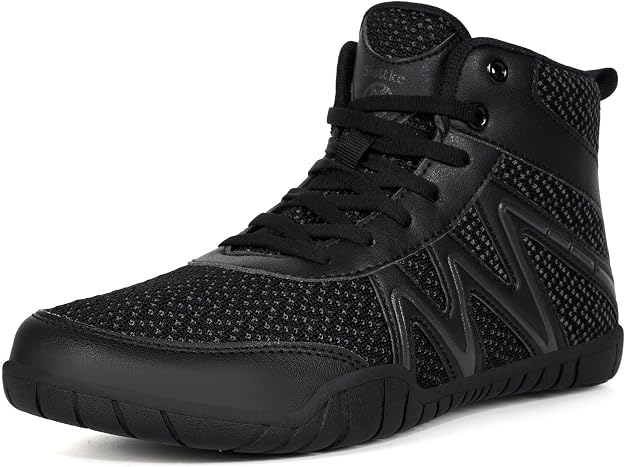
Sisttke Wide Boxing Shoes
The Sisttke wide shoes are aimed at people who struggle with narrow, pinched toe boxes. They serve boxing, wrestling, and general fitness training, making them versatile for people who mix workouts.
Check Price on AmazonA roomy toe area lets your toes spread naturally, which improves balance and reduces hot spots. Wide-footed boxers often fight with sizing, either choosing a size too long to gain width or squeezing into a snug pair that causes discomfort. A shoe designed for wider feet solves that problem at the source.
Expect a lightweight, flexible shoe in the same spirit as other wrestling-style models. It will not deliver the heavy ankle support of a mid-top boot, but for comfort and freedom it is a strong, budget-conscious choice.
Pros
- Roomy, accommodating fit
- Lightweight and flexible
- Multi-sport versatility
- Budget-friendly
Cons
- Lower ankle support
- Less brand heritage in boxing
- Materials are geared to value

FISTRAGE Leather Boxing Shoes
For boxers who love the traditional appearance and structure of leather, FISTRAGE offers a pair that leans into that aesthetic while remaining light enough for modern training.
Check Price on AmazonLeather uppers tend to mold to the foot as they break in, creating a personalized fit over several sessions. They also look classic and handle wear nicely when cared for. The trade-off is warmth, so if you train in a hot gym, expect your feet to feel it more than they would in a mesh shoe.
The higher cut common to leather boxing boots provides extra ankle stability, which can be reassuring during sparring or long technical sessions. If you appreciate old-school style, this pair feels right at home.
Pros
- Classic leather appearance
- Supportive higher cut
- Molds to your foot over time
- Good for technical sessions
Cons
- Less breathable than mesh
- Needs a short break-in period
- Slightly less lightweight than athletic styles
Need a wider toe box or a leather upper? Browse these specialty styles.
Shop Wide & Leather Styles9. Best Boxing Shoes by Boxer Type
Rankings are useful, but your own situation decides which pair deserves your money. Here is how we would match the shoes in this guide to different kinds of boxers, along with the reasoning behind each recommendation.
The complete beginner
If you are just getting started, your priorities are stability, comfort, and sensible spending. You do not yet know your preferred style, and you may not even be sure you will stick with the sport. The Ringside Undefeated is our first suggestion because it offers a forgiving, supportive platform at a friendly price. The Ringside Diablo is a close second for those who want maximum lightness and the lowest spend. While you are building your kit, pair your shoes with the right protective gear, starting with our overview of the best boxing gloves for beginners.
The fitness boxer
Fitness boxers often train in classes or at home, hitting a bag a few times per week and mixing in cardio and strength. Comfort over long sessions matters most, and the Adidas Box Hog 4 is a natural fit for this crowd. Its athletic feel makes it easy to wear all day, even outside of training. The Title Speed-Flex Encore is another sound choice if you like flexible, springy movement.
The technical boxer and sparring regular
If you spar often and care about precise footwork, step up to the Venum Elite, Everlast Elite V2, or Hayabusa Pro. These models offer the secure lockdown and ankle support that sparring demands, and they hold up to repeated hard use. Pick the Venum Elite for a modern feel, the Everlast Elite V2 for classic structure, and the Hayabusa Pro if you want premium craftsmanship and do not mind the cost.
The wide-footed athlete
Wide feet deserve a shoe that does not fight them. The Sisttke Wide Boxing Shoes are the clear first stop, and many boxers also find that going up half a size in a leather model like the FISTRAGE gives enough room once the upper softens. Whatever you choose, avoid cramming your feet into narrow designs, because that leads to blisters, numbness, and compromised balance.
The ankle-conscious fighter
If you have rolled your ankle before, or simply want extra reassurance, lean toward mid-top and higher-cut models. The Everlast Elite V2, Venum Elite, Ringside Undefeated, and FISTRAGE all provide meaningful ankle coverage. Keep in mind that shoes are only one part of ankle health, so strengthening and mobility work remain essential.
The budget-minded trainee
You can build solid footwork in inexpensive shoes. The Ringside Diablo, Sisttke Wide, and Venum Contender represent strong value. Put the savings toward good wraps and a clean glove routine, which matter more for long-term hand health than a premium sole ever will.
Youth boxers, women boxers, and coaches
Young athletes grow quickly, which means they often outgrow shoes before they wear them out. For youth boxers, an affordable, lightweight pair like the Ringside Diablo makes sense, and it is wise to leave only a small amount of growth room so the foot does not slide. Check that the shoe laces up snugly and that your child can tie it independently, because loose laces are an easy way to trip during drills.
Women boxers sometimes find that men’s sizing runs large or wide, and many brands offer sizing conversions on their listings. Use the conversion charts, read feedback from buyers with similar foot shapes, and remember that the fit principles do not change: a locked heel, a secure midfoot, and a toe box that allows slight spreading. Most models in this guide come in a wide range of sizes, so you should be able to find a pair that suits you.
Coaches and mitt holders spend long hours on their feet, often moving backward and laterally while absorbing impact. Comfort and ankle stability are the main goals, which makes the Adidas Box Hog 4, Everlast Elite V2, and Venum Elite appealing. A bit of extra cushioning from a thin insole can also help, as long as it does not raise your heel or crowd your toes.
| If you are… | Start with | Backup option |
|---|---|---|
| A first-time boxer | Ringside Undefeated | Ringside Diablo |
| A fitness boxer | Adidas Box Hog 4 | Title Speed-Flex Encore |
| A frequent sparrer | Venum Elite | Everlast Elite V2 |
| A premium buyer | Hayabusa Pro | Venum Elite |
| Wide-footed | Sisttke Wide | FISTRAGE Leather (half size up) |
| On a tight budget | Ringside Diablo | Venum Contender |
Matched your boxer type? See the latest options and reviews.
Shop Beginner Boxing Shoes10. Sizing and Fit Guide: Getting It Right the First Time
Even the best boxing shoe becomes a bad purchase if it does not fit. Because the category sits somewhere between athletic shoes and wrestling footwear, sizing can behave differently from your everyday sneakers. Use this section as a practical roadmap.
Measure your feet at the right time
Feet swell during the day and expand under training stress. Measure in the late afternoon or evening, while standing, and measure both feet, since most people have one that is slightly larger. Use the larger measurement as your guide. Trace your foot on paper, measure from heel to longest toe, and compare it to the manufacturer’s size chart whenever one is available.
What a good fit feels like
- Heel: locked in with minimal lift when you rise onto the balls of your feet.
- Midfoot: snug but not painful, with the laces able to adjust tension without extreme tightening.
- Toes: able to spread slightly, with about a thumb’s width of space or less beyond the longest toe depending on the style.
- Ankle: supported, without pinching or restricting normal movement.
Common sizing patterns
Many boxers report that performance-style shoes run slightly snug or true to size, but it varies by brand and release. Wrestling-style shoes frequently feel tight in the first few wears because they are built to hug the foot. Leather models loosen over time, while mesh designs tend to keep their shape. Reading recent buyer comments on the product page is one of the best ways to spot patterns, such as models that run small or narrow.
Socks matter
Thin, moisture-wicking socks are the best match for boxing shoes. Thick socks can crowd the toes and shift the fit, and cotton holds moisture, leading to slipping and blisters. Try shoes on with the type of sock you plan to wear in training, or order with that sock in mind.
Between sizes?
If you fall between sizes, think about the shoe’s material. In leather, sizing up half a size may leave room for the shoe to mold. In a snug mesh or synthetic design, sizing down might lead to a sloppy fit, so many people choose the larger size and tighten the laces. If you have wide feet, a wide-specific design usually beats going up a full size, because extra length can make you trip over the toes during fast footwork.
| Fit Problem | Likely Cause | Quick Fix |
|---|---|---|
| Heel slips up and down | Shoe too large or loose lacing | Use a heel-lock lacing pattern or size down |
| Toes feel crushed | Narrow toe box or size too small | Try a wide model or go up half a size |
| Arch pain | Flat sole with low arch support | Try thin insoles designed for flat shoes |
| Blisters on heel | Stiff new leather or friction | Wear thin socks and break in gradually |
| Numb toes | Laces too tight on the forefoot | Relace and loosen the toe area |
Not sure about size? Browse listings with detailed size charts and buyer feedback.
Check Sizes on Amazon11. Break-In, Care, and Making Your Shoes Last
Good boxing shoes can serve you for a long time if you treat them well. A few simple habits protect your investment and keep your feet healthier.
Breaking in new shoes
Do not debut brand-new shoes in a hard sparring session. Start by wearing them around the house for short periods, then use them for warmups and light bag rounds. Increase intensity gradually over several sessions. Leather and stiffer synthetics need the most time, while mesh styles usually feel ready almost immediately. If you notice rubbing, adjust the lacing before blaming the shoe, because small tweaks often solve hot spots.
The break-in mindset is the same one you use with gloves. If you want a refresher on easing new gear into rotation, see our walkthrough on how to break in boxing gloves, since many of the principles carry over.
Drying and airing
Moisture is the enemy. After each session, remove the insoles if possible, loosen the laces, and pull the tongue forward so air can circulate. Keep the shoes out of your gym bag between workouts, because a closed, humid bag turns into a petri dish. Avoid radiators, hair dryers, and direct sun, which can warp materials and weaken adhesives.
Cleaning
Wipe the upper with a damp cloth and mild soap, and use a soft brush on the sole to remove dust that reduces grip. Avoid soaking leather and avoid tossing shoes into the washing machine unless the manufacturer explicitly says it is safe. Dust on the sole is an overlooked cause of slipping, so a quick wipe before training pays off. If your whole kit tends to build up sweat, a regular care routine for hand wraps matters too, which you can learn in our guide to how to wash boxing hand wraps.
Odor control
Shoes absorb sweat, and odor follows. Rotating between two pairs gives each time to dry fully. Sprinkling baking soda inside overnight, using cedar inserts, or letting shoes sit in a ventilated spot all help. Moisture-wicking socks make a big difference as well.
Storing and traveling with your shoes
How you carry and store your shoes affects how long they last. Keep them in a breathable shoe bag or a separate compartment of your gym bag so sweat and dirt do not transfer to the rest of your gear. If you travel to a competition or a new gym, pack them with the laces loosened and stuff the toes with a pair of clean socks to hold their shape. At home, store them somewhere cool and dry, away from sunlight and heat, which can dry out leather and weaken the glue that holds the sole in place. Consider keeping a small towel in your bag to wipe the sole before you step onto the canvas, since a quick wipe removes the dust that causes most slipping complaints.
It also helps to build a tiny post-training habit. When you finish your last round, take thirty seconds to loosen your laces, pull out the tongue, and set the shoes somewhere they can air out. This simple routine prevents the buildup of moisture and bacteria that causes odor and material breakdown, and it extends the life of even an inexpensive pair by a noticeable margin.
Know when to replace them
- The sole feels slick or glassy, reducing control during pivots.
- The foam or lining has collapsed, leaving the footbed flat and uncomfortable.
- The upper has tears near flex points or the toe.
- The heel counter has lost its shape and no longer holds your foot.
- You notice new aches in your ankles, arches, or knees that appeared as the shoes aged.
Replacing shoes before they fail is cheaper than treating a nagging injury, and a fresh pair often gives you an instant lift in confidence and movement.
Stock up on a backup pair so your main shoes can dry between sessions.
Find a Second Pair12. Footwork Tips and Common Mistakes When Buying Boxing Shoes
Shoes can support your footwork, but they cannot create it. Once you have the right pair, a handful of habits help you actually use the advantage. We close the deep dives with essential drills and the mistakes we see most often.
Footwork fundamentals your shoes will help you feel
1. Stay on the balls of your feet
Your heels should hover slightly off the floor, ready to push. A thin, flat sole makes it easier to sense the exact point where your weight sits. If you are rocking back onto your heels, you will feel a drop in responsiveness.
2. Practice the step-and-slide
Move the foot closest to your intended direction first, then follow with the other, maintaining stance width. Drag-step drills across the floor teach you how much glide your shoes allow and whether the sole feels predictable.
3. Pivot cleanly
Rotate on the ball of the lead foot while keeping the heel light. A smooth pivot zone should let you turn without twisting your knee. If a shoe catches, adjust your technique, and if the catching persists, the sole may be too grippy for your floor.
4. Keep your stance balanced
Weight should stay centered rather than falling onto either foot. Mirror drills with a partner or in front of a mirror help you check this, and shoes that lock your heel make it easier to keep your base steady.
5. Drill with purpose
Short, focused sessions with ladder drills, line drills, and shadowboxing build the habit of small, efficient steps. Even five minutes at the start of every workout makes a difference over a few months. If you are brand new to these ideas, our overview on how to start boxing gives a helpful roadmap.
Common buying mistakes
- Choosing style over fit. Great looks do not matter when your toes go numb in round two.
- Ignoring your floor. Canvas, hardwood, rubber, and polished concrete each interact differently with soles, so think about where you train.
- Buying running shoes in disguise. Thick, cushioned soles undermine balance and pivoting.
- Skipping the break-in. Wearing stiff new shoes for the first time in sparring invites blisters and slips.
- Overbuying support. A high-top you hate wearing is worse than a mid-top you love.
- Underbuying durability. Ultra-cheap shoes may fall apart, costing more in the long run.
- Forgetting socks. The wrong socks can ruin the best-fitting pair.
- Not checking recent reviews. Manufacturers update designs, and recent feedback reveals sizing quirks.
A simple weekly footwork routine
You do not need an elaborate plan to improve your movement. Try three short blocks per week, each lasting about ten minutes before your main training. In the first block, practice step-and-slide drills along a line, moving forward, backward, and side to side while keeping your stance width consistent. In the second, shadowbox with an emphasis on pivots, turning off the lead foot after each combination so you build smooth rotation. In the third, work on direction changes, using quick resets and small adjustments rather than big lunges.
Pay attention to how your shoes behave during each block. Notice whether your heel stays locked, whether the sole glides evenly, and whether your toes feel comfortable at the end. These small observations tell you far more about the fit than a first impression in the living room. Over a month or two, you will likely feel your balance improve, and your shoes will start to feel like a natural extension of your stance.
Ready to move with confidence? Pick your pair and start drilling.
Shop All Boxing ShoesFrequently Asked Questions About Boxing Shoes
1. Do I really need boxing shoes, or can I wear regular sneakers?
You can start in clean, flat-soled sneakers, and plenty of beginners do. The trouble is that most everyday trainers have thick cushioning, raised heels, and tread patterns built for running. Those features make side-to-side movement feel unstable and can cause your foot to stick during pivots, which stresses the knees and ankles. Boxing shoes are light, thin, flat, and designed for rotation, so they make footwork feel natural and help you feel the floor. If you train a couple of times a week or more, or you plan to spar, dedicated shoes are a worthwhile upgrade. If you only do occasional cardio boxing, you can wait, but you may notice an immediate improvement in balance the first time you try a proper pair.
2. Are wrestling shoes okay for boxing?
Often, yes. Wrestling shoes share the thin sole, light weight, and flexible build that boxers want, and several models in this guide, including the Ringside Diablo and Sisttke Wide, are marketed for both sports. The main difference is that traditional boxing boots usually add more ankle height and a sole tuned for pivoting. If you prefer ankle freedom and a snug, sock-like feel, wrestling-style shoes can be perfect. If you want more support or you spar frequently, a mid-top boxing shoe may feel more secure. Our article on whether wrestling shoes and boxing shoes are the same goes into more detail so you can decide which category suits you.
3. Should I choose low-cut, mid-top, or high-top boxing shoes?
It depends on your priorities. Low-cut shoes are the lightest and allow the most ankle movement, which suits boxers who value speed and freedom. Mid-tops offer a balance by supporting the ankle without much added weight, and they are the most popular choice for general training. High-tops give maximum coverage and a classic look, and they can feel reassuring for sparring or for fighters with a history of ankle problems. If you are unsure, a mid-top is usually the safest starting point. Remember that footwear is only one part of ankle health, so mobility work, balance training, and strengthening exercises are still important regardless of the cut you pick.
4. How should boxing shoes fit?
They should feel snug but not painful. Your heel should stay locked down when you rise onto the balls of your feet, your midfoot should feel secure without numbness, and your toes should be able to spread a little. Too much room causes sliding and blisters, while too little restricts circulation and balance. Because different brands fit differently, check recent buyer comments for patterns like running small or narrow. Try shoes with the same thin, moisture-wicking socks you plan to train in. If you have wide feet, look for models designed for them, like the Sisttke Wide, rather than simply buying a longer size, since extra length can cause tripping during quick footwork.
5. How long do boxing shoes last?
Lifespan depends on how often you train, the floor you use, and how you care for the shoes. Someone training a few times per week on a clean gym floor may get many months from a well-made pair, while a fighter training daily on rough surfaces may wear them out faster. Signs it is time for a replacement include a slick sole, collapsed cushioning, tears in the upper, and a heel that no longer holds your foot. Rotating two pairs, drying shoes after each session, and avoiding outdoor use will help them last. Leather often ages gracefully, while mesh may show wear sooner but stays lighter and cooler during training.
6. Can I wear boxing shoes for running or outdoor training?
It is best not to. Boxing shoes have thin soles with little cushioning and a smooth bottom designed for indoor floors. Running on pavement can wear down the sole quickly, reduce grip, and put extra stress on your feet and shins because there is almost no shock absorption. Outdoor surfaces can also grind away the pivot zone, ruining the smooth rotation that makes the shoes useful. Keep a separate pair of running shoes for roadwork and save your boxing shoes for indoor sessions. Carry them in a bag and change at the gym so the soles stay clean and in good condition.
7. What is the best boxing shoe for beginners?
For most beginners, the Ringside Undefeated is a smart choice thanks to its supportive mid-top design, simple construction, and approachable price. If you want an even lighter and cheaper pair, the Ringside Diablo is a capable alternative, and the Adidas Box Hog 4 is appealing if comfort is your top priority. Beginners should focus on fit, stability, and feeling comfortable more than on advanced features. It also helps to complete your starter kit sensibly, including gloves and wraps. Our guides on the best boxing gloves for beginners and the best hand wraps for boxing are useful companions.
8. Do boxing shoes make you faster?
They will not magically add speed, but they remove obstacles that slow you down. Lighter weight means less fatigue, a flat sole improves balance, and a smooth pivot zone helps you change direction without catching. Many boxers notice that footwork feels crisper and more controlled, which can feel like greater speed. True speed still comes from technique, conditioning, and practice. Think of boxing shoes as an enabler: they make good habits easier to execute, so you get more benefit from every drill you perform. If a shoe feels heavy, loose, or sticky, it can hold you back, so choose a pair that matches your foot and training style.
9. How do I stop my boxing shoes from slipping or sticking?
Start with the floor and the sole. A dusty sole can slip, so wipe it with a slightly damp cloth before training. If the sole is worn smooth, it may be time for a replacement. If the shoes stick, the floor may be very grippy or the tread may be too aggressive for your surface, and you may need to adjust your technique by pivoting on the ball of the foot with the heel lifted. Confirm that your shoes fit well, because a loose heel can feel like slipping even when traction is fine. Avoid walking outdoors in your boxing shoes, since dirt and moisture change grip dramatically.
10. How do I clean and deodorize boxing shoes?
Wipe the upper with a damp cloth and mild soap, use a soft brush for the sole, and let the shoes air-dry away from direct heat. Remove insoles when possible so they can dry on their own. For odor, rotate between pairs, use baking soda or cedar inserts, and wear moisture-wicking socks. Avoid the washing machine unless the manufacturer says it is safe, because heat and agitation can damage adhesives and shape. Treat the rest of your gear with equal care. For example, our guides on how to clean boxing gloves and how to wash boxing hand wraps help keep your entire bag fresh.
11. Are expensive boxing shoes worth it?
They can be, if you train often and value finer construction, a more secure fit, and better durability. Premium models like the Hayabusa Pro or Venum Elite tend to feel more refined and may last longer under heavy use. On the other hand, a mid-priced pair like the Title Speed-Flex Encore or Venum Contender is enough for many boxers, and budget options like the Ringside Diablo work nicely for beginners and casual trainees. A sensible approach is to start with a reasonably priced pair, learn what you like, and upgrade later if you find yourself wanting something specific. Fit and comfort matter far more than price alone.
12. Do I need different shoes for sparring and bag work?
Most boxers use the same pair for everything, and that is perfectly fine. Some people keep a lighter, lower-cut pair for bag rounds and conditioning and a more supportive mid-top for sparring, but this is a preference rather than a requirement. If you do want two pairs, pairing a budget model with a premium one gives you both rotation and variety, and it lets each pair dry between sessions. The most important thing is that your shoes fit well, grip predictably, and feel comfortable throughout the longest rounds you plan to train.
Final Verdict: Choose the Pair That Lets You Forget Your Feet
The best boxing shoes are the ones you stop noticing. They hold your heel, let you pivot without a catch, support your ankles just enough, and stay light through the final round. Every pair in this guide can deliver that experience for the right person, and the key is matching the shoe to your foot, your floor, and your goals.
If you want a quick decision, here is how we would summarize it. Grab the Venum Elite for agile, modern performance, the Everlast Elite V2 for classic stability, or the Hayabusa Pro if you want premium build quality. Choose the Ringside Undefeated if you are new to the sport, and the Ringside Diablo if you want the lightest, most affordable option. The Title Speed-Flex Encore, Venum Contender, and Adidas Box Hog 4 cover the middle ground with flexibility, value, and comfort respectively. Wide-footed boxers should start with the Sisttke Wide, and lovers of traditional leather will enjoy the FISTRAGE Leather.
Whatever you pick, take your time with sizing, break the shoes in gradually, and give them room to dry between sessions. Pair them with solid fundamentals and you will feel the benefit in every round. Good luck in the gym, and keep your feet moving.
Your next session deserves better footing. Find your boxing shoes today.
Shop Boxing Shoes on Amazon